

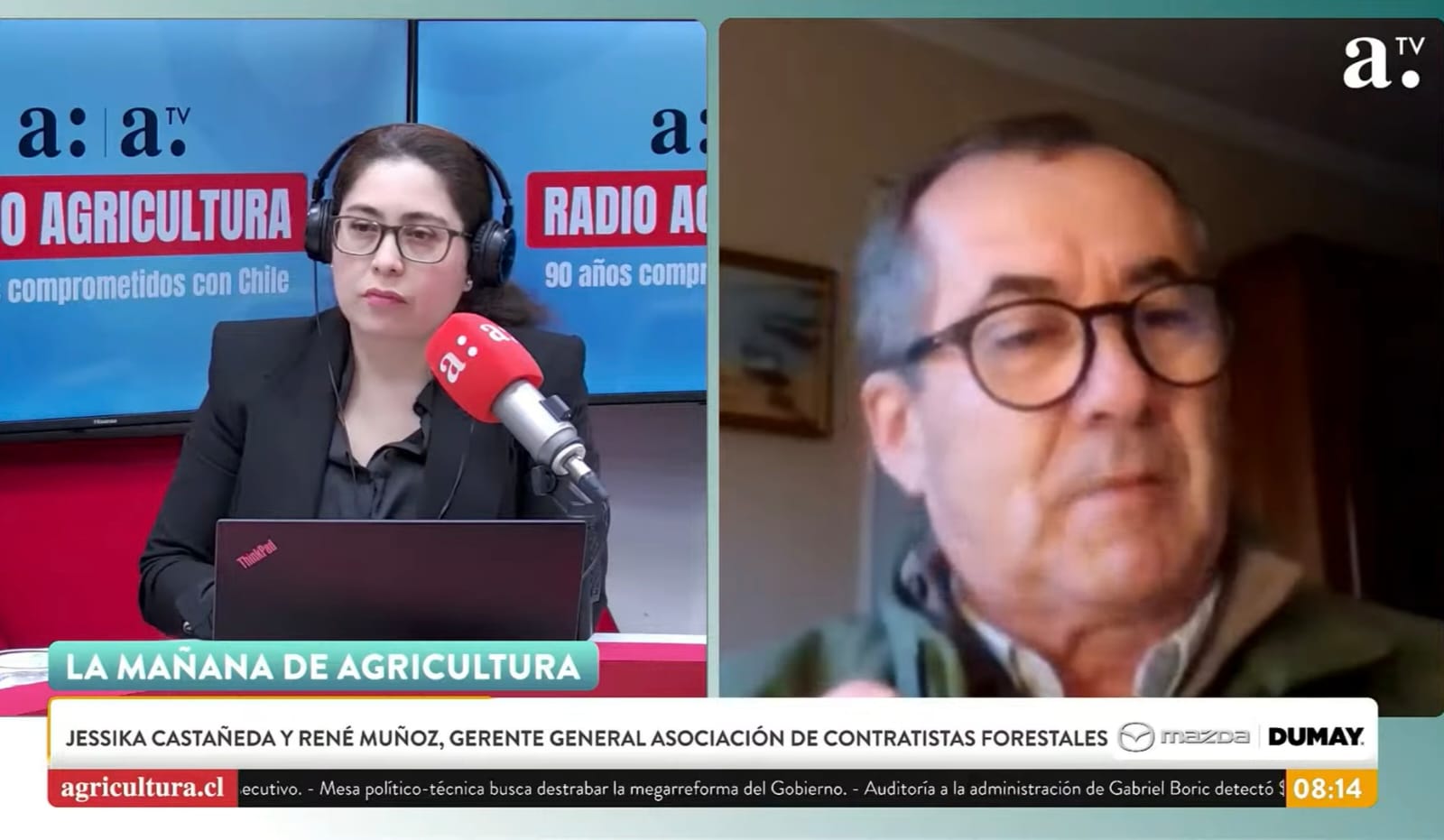
Intentional forest fires, the impossibility of insuring plantations and machinery, and more than a decade without an effective afforestation policy are among the main factors that, according to Acoforag, are deepening the crisis facing the Chilean forestry sector.
During an interview with Radio Agricultura, the association's manager, René Muñoz, stated that insecurity has become one of the biggest obstacles to the development of the activity, affecting the confidence of investors, landowners, and companies operating in the Biobío and La Araucanía regions.
Fires that discourage investment
One of the aspects that most concerns the guild is the high number of intentionally caused forest fires.
Muñoz assured that nearly half of the forest fires recorded annually in Chile would correspond to intentional acts, a situation that, in his opinion, has generated a strong impact on productive activity and the willingness of landowners to replant.
Each year, the country records between 6,000 and 7,000 forest fires, of which a significant proportion would have a deliberate origin, a scenario that, as he explained, is aggravated by the low percentage of cases that end in judicial convictions.
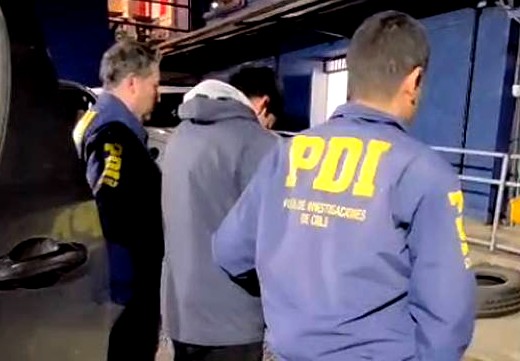
In this context, he stated that both fires and attacks on machinery and forestry infrastructure have low levels of clarification, which maintains a perception of impunity among those who carry out productive activities in the southern macrozone.
The leader also recalled that the mega-fires recorded in 2017 and 2023 left nearly 350,000 hectares of forests destroyed, significantly reducing the future availability of wood to supply the forestry industry and small sawmills.
Without coverage to protect assets
Another effect of the violence, Muñoz indicated, is the withdrawal of insurance companies from much of the south of the country.
According to him, for at least six or seven years, companies have had enormous difficulties in contracting insurance that covers plantations, machinery, and forestry infrastructure in areas considered to be at higher risk.
As a result, he rejected the versions that occasionally circulate on social media, where some fires are attributed to alleged fraud to collect insurance.
"No one is going to destroy their assets to collect insurance that simply does not exist," he stated, insisting that the absence of coverage leaves both large companies and small and medium-sized landowners exposed.
Fifteen years without an afforestation policy
The manager of Acoforag stated that another of the sector's structural problems is the lack of a permanent forestry promotion policy.
He explained that Chile has been without developing relevant afforestation programs for approximately fifteen years, differentiating this activity from the mandatory reforestation that companies must carry out after harvesting their plantations.
The figures, he indicated, show a significant decline. While during the 2000s an average of nearly 40,000 hectares per year were afforested, currently that area barely reaches around 1,800 hectares annually.
For the leader, this decrease compromises the future supply of wood, limits the establishment of new industries, and reduces opportunities for economic development in forestry regions.
In this scenario, he valued the announcement by the Ministry of Agriculture to promote a forestry promotion bill, an initiative that, in the guild's opinion, would allow recovering the afforestation of degraded and eroded lands, respecting the freedom of landowners to decide which species to establish.
The sector's priorities
During the interview, Muñoz proposed five measures that he considers essential to restore the dynamism of forestry activity.
The first aims to restore security conditions in the territories where it is currently impossible to carry out productive operations.
Secondly, he insisted on the need to approve a new forestry promotion law that encourages afforestation and allows recovering the planted area.
He also proposed having specific legislation on forest fires that strengthens prevention, establishes shared responsibilities between the State and landowners, and allows facing this type of emergency more effectively.
As a fourth priority, he mentioned the need to simplify administrative processes for the sustainable management of native forest, eliminating bureaucratic obstacles that, according to him, hinder the development of thousands of small landowners.
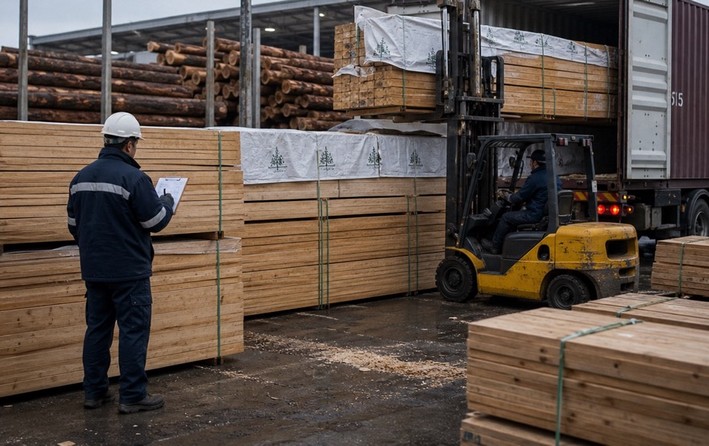
Finally, he called for promoting wood construction more strongly as a long-term public policy.
Muñoz pointed out that while in several European countries this material is used in between 80% and 90% of buildings, in Chile its use barely reaches 20%, despite its environmental, structural, and sustainability advantages.
Impact on the regions
The manager of Acoforag stated that forestry activity constitutes one of the main economic engines of the south-central part of the country, so the current crisis transcends companies in the sector.
In his opinion, the decrease in investments directly affects contractors, transporters, small sawmills, service providers, merchants, and thousands of families that depend on the forestry production chain.
"Without security there are no companies; without companies there is no investment; and without investment there is no work or development. What we need is to recover the conditions to produce again, generate employment, and continue driving the growth of the regions," he concluded.





Comments (0)
No comments yet. Be the first to comment!
Leave a comment