

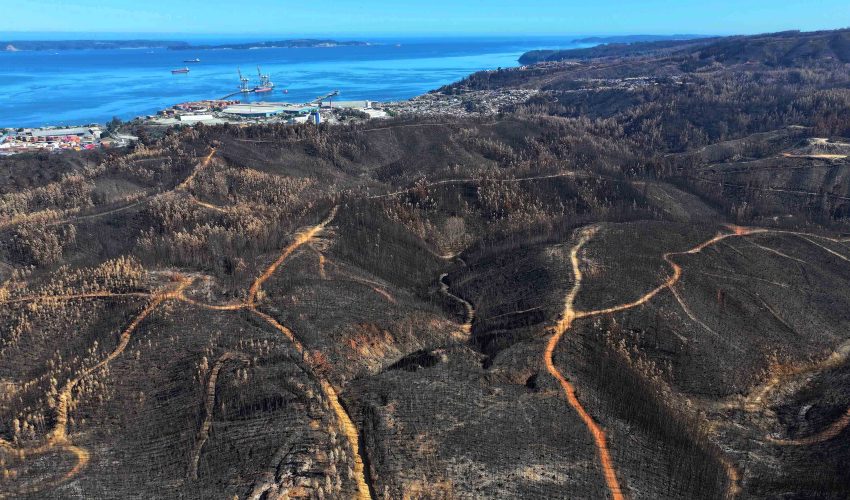
An investment of $9.8 million will seek to recover 4 thousand hectares affected by forest fires in Biobío, where the Regional Government of Biobío (Gore) and the National Forestry Corporation (Conaf) formalized a financing agreement (Fndr) titled "Productive recovery of forests affected by fires."
The initiative provides that the resources will be administered by Conaf for a period of 36 months. The plan will benefit between 500 and 600 small and medium-sized rural landowners, in addition to projecting the creation of nearly 5,000 direct jobs.
The project responds, among others, to the alerts issued in due course by the Association of Forestry Contractors (Acoforag) about the employment crisis in a sector that supports nearly 50 thousand families in the Region. In this regard, its manager, René Muñoz, has previously warned about a "state abandonment of the forestry sector," attributing it to nearly three decades of insecurity in the southern macrozone.
"The crisis is due to a state abandonment of the forestry sector, not of a particular government. Let's think that we have been subjected for almost 30 years to a level of violence and insecurity in the southern macrozone that prevents us from working, launching new projects, investing, and developing," Muñoz highlighted in July of this year.
Executive phase and labor force
During the ceremony held at the Gore facilities, the executive director of Conaf, Aída Baldini, highlighted that the program combines productive development with a strong social impact, aimed especially at small producers who do not have the resources to recover their land on their own.
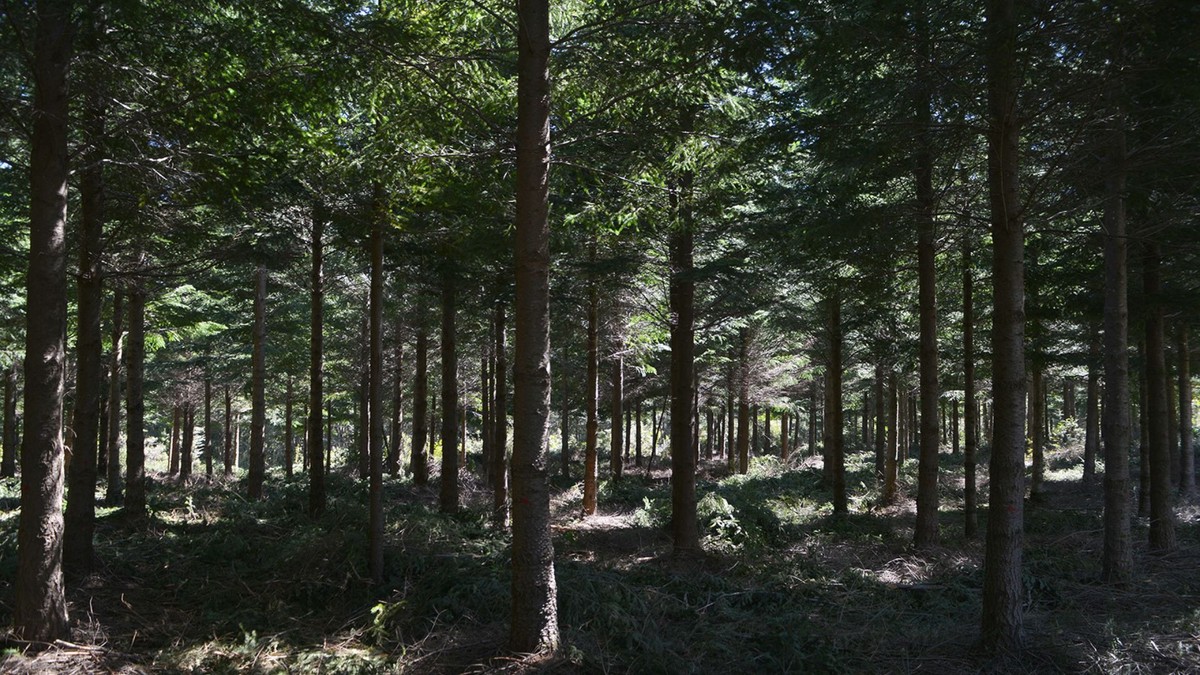
For his part, the regional director of Conaf, Álvaro González, detailed the execution schedule: "We are going to sow to begin plantings in the winter of 2027. There are three years of administration and two of planting."
González also emphasized the fragmentation of the plots: "It is not a single massive tract, but rather interventions of 5, 10, or 20 hectares. This work is carried out mostly with day laborers and soil preparation with machinery, which makes it a highly demanding activity in direct labor for the region."
Likewise, the regional director of Conaf highlighted that "since they are small properties and medium-sized owners that we are going to benefit, we estimate that we will benefit between 500 and 600 owners and we will hire a workforce amounting to practically 5,000 people directly. We are highly demanding of labor at a time when our region needs this support."
Economic incentive and calls for parliamentary management
The regional governor of Biobío, Sergio Giacaman, valued the relevance of the sector in the local productive matrix: "At least 15% of the regional GDP comes from the forestry sector, which supports more than 30,000 jobs. Without a doubt, it is the main economic engine of our area."
Likewise, Giacaman addressed the need to advance in security and institutional framework. He valued the legislative progress in the classification of wood theft and recognized the work of the Regional Prosecutor's Office. Similarly, he made an explicit call to the parliamentarians of the area to unblock the Forest Fire Law project: "I lovingly ask our parliamentarians: let's reach an agreement and finish legislating. We are the region that this issue hurts the most."
Giacaman also expressed his concern about the availability of resources for fighting forest fires during the summer season, and hinted at the possibility of articulating the Proempleo program to reduce costs in the cleaning and clearing of fire-affected lands.
"The other thing that needs to be done is that we have an associated budget for fighting forest fires. It worries me, we have all met the Minister of Finance, Jorge Quiroz, it worries me that this year we have less money. Because with money, fires are put out. You have to hire planes, brigades... and if there is no money, things will go badly for us and worse things will happen to us than what we experienced this summer," said the regional authority.
Regarding the adjustment with the Proempleo program, Giacaman advanced that "I have discussed it with the Minister of the Interior, Claudio Alvarado, I discussed it in due course with the Minister of Labor (Tomás Rau). It would be perfect if the Proempleo programs leveraged part of this work. It would allow us to spend fewer resources on clearing the land and focus more on planting. If we achieve that, it would be a great goal. In essence, the people who work in Proempleo bid on projects every six months and it could clearly be focused on the associated issue of removing debris from lands that have been affected by fires, and that would considerably lower the project's costs. If that could be done, it would be extraordinary."
Support from productive unions
The unions of the area positively valued the signing of the agreement. Alejandro Casagrande, regional president of the Chilean Wood Corporation (Corma), described the measure as "tremendous news with economic, social, and ecological impact, focused on helping small rural neighbors recover their heritage."
Meanwhile, Víctor Sandoval, regional president of PymeMad (Biobío and Ñuble), highlighted state support at a complex time for small and medium-sized enterprises: "This project demonstrates the will to move forward and confirms that the forestry sector contributes significantly to rurality. The creation of intensive labor is key to strengthening rural employment today."
Source:Diario Concepción




Comments (0)
No comments yet. Be the first to comment!
Leave a comment