

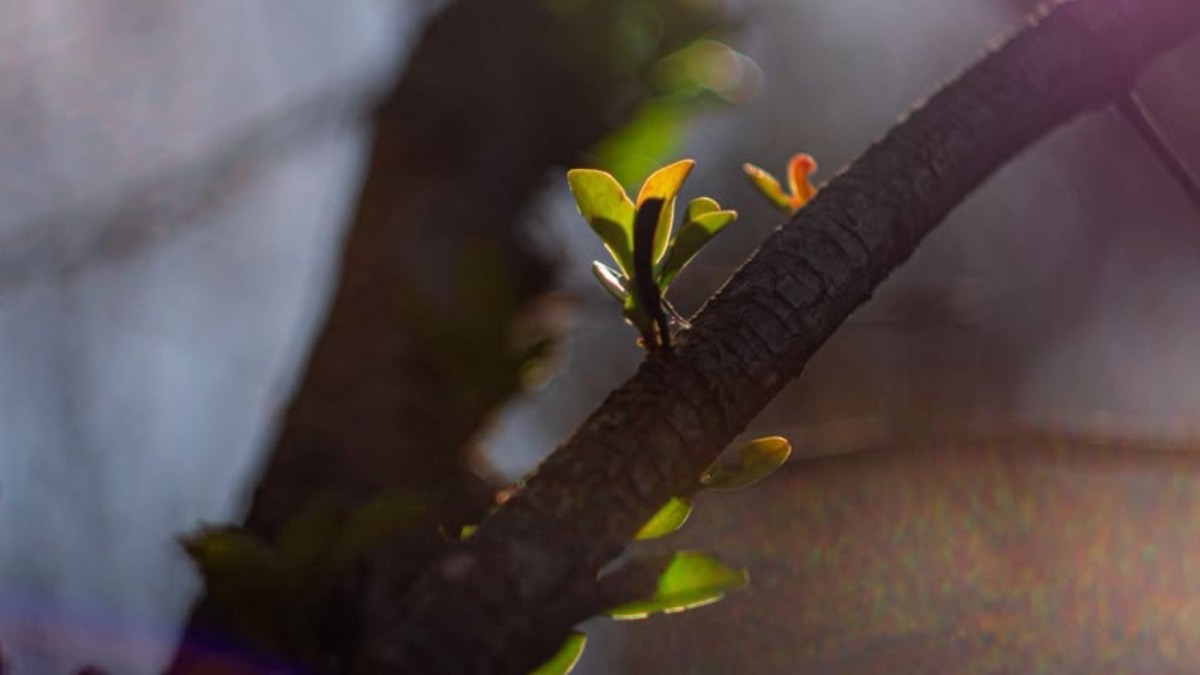
In the native forests of Hualqui, there is a natural heritage that has been part of the landscape for generations and now faces a critical scenario. This is the queule (Gomortega keule), an endemic species of Chile, considered endangered and recognized as a Natural Monument.
Precisely to strengthen its protection and bring its value closer to communities, residents and organizations from the town of Redolino participated in a session of the Species Recovery, Conservation, and Management Plan (RECOGE) for the queule, an initiative that seeks to promote concrete actions to prevent the disappearance of threatened species.
The activity brought together the Biodiversity and Protected Areas Service (SBAP), the Municipality of Hualqui, ARAUCO, and community representatives. The session combined information and on-the-ground action: first, participants learned about the characteristics of the queule, the threats it faces, and the importance of conserving its populations; subsequently, they planted specimens intended to reinforce the species' presence in the territory.
The head of Terrestrial Biodiversity at SBAP Biobío, Diego Alarcón, highlighted that the RECOGE program is aimed at species under some category of threat. In this case, he explained, the focus is on a tree that, in addition to being endangered, holds special relevance for the country's natural heritage.
The conservation of the queule also requires the participation of those who live and carry out activities in the territories where specimens still exist. A significant portion of its populations is found on private land, so collaboration between public agencies, communities, and landowners is essential to generate protection and recovery measures.
A conservation chain that begins with a seed
The trees planted in Redolino have behind them a process that begins long before reaching the forest. The specimens were produced at ARAUCO's Quivolgo Nursery, located in Constitución, where specialized work is carried out for the propagation of native species intended for conservation and restoration initiatives.
In the case of the queule, the process begins with the collection of fruits and seeds from different territories. Each material is identified according to its origin, allowing information about its source to be maintained and subsequently using the plants in restoration actions or population reinforcement in areas linked to those same populations.
Currently, the nursery maintains more than 2,000 queule plants at different stages of development, becoming an important support for initiatives seeking to increase the availability of specimens intended for conservation.
In this way, the recovery of the species is not limited to planting new trees. It involves protecting existing populations, conserving their genetic diversity, recovering environments where it can thrive, and generating knowledge that enables better decisions in the future.
The role of communities
The session held in Redolino also had an educational and community component. Knowing the queule, identifying it, and understanding its importance are essential elements for those who inhabit these territories to become active actors in its conservation.
The president of the Communal Union of Neighborhood Councils of Hualqui, María Sandra Oyarzo, valued the opportunity to bring this knowledge closer to the community and highlight the natural wealth existing in the commune.
For ARAUCO, the protection of the queule is part of a broader effort related to biodiversity conservation in different territories of the country. The company participates in initiatives associated with RECOGE plans for species such as the huemul, Darwin's frog, Darwin's fox, the pudú, the huillín, the ruil, and the queule itself, contributing through territorial management, technical knowledge, and plant production.
ARAUCO's Heritage Manager, Rodolfo Ceballos, emphasized the environmental and territorial value of the queule and the need to coordinate efforts among institutions, communities, and landowners to advance its protection.
A species that connects with millions of years of history
The queule also possesses a characteristic that makes it an exceptional species within Chilean flora. It is the only living species of a botanical family whose origin dates back approximately 100 million years, so its disappearance would mean the loss of an entire lineage of biodiversity.
Its natural distribution is very limited and is concentrated in sectors of the Coastal Mountain Range between the Maule and Biobío regions. That reduced presence, combined with the threats it faces, has made its conservation a priority.
During August, the SBAP, together with the Ministry of the Environment and with the collaboration of companies like ARAUCO, carried out activities in different communes of Biobío to bring knowledge about this species closer to communities. The deployment included Penco, Los Álamos, Hualpén, Talcahuano, Florida, and Hualqui.
The challenge, ultimately, goes far beyond conserving individual trees. Protecting the queule means caring for the forests where it lives, maintaining the genetic diversity of its populations, recovering its habitat, and strengthening the link between communities and a species that constitutes an irreplaceable part of Chile's natural heritage.
On this path, one idea is fundamental: knowing a species is also beginning to protect it.



Comments (0)
No comments yet. Be the first to comment!
Leave a comment