

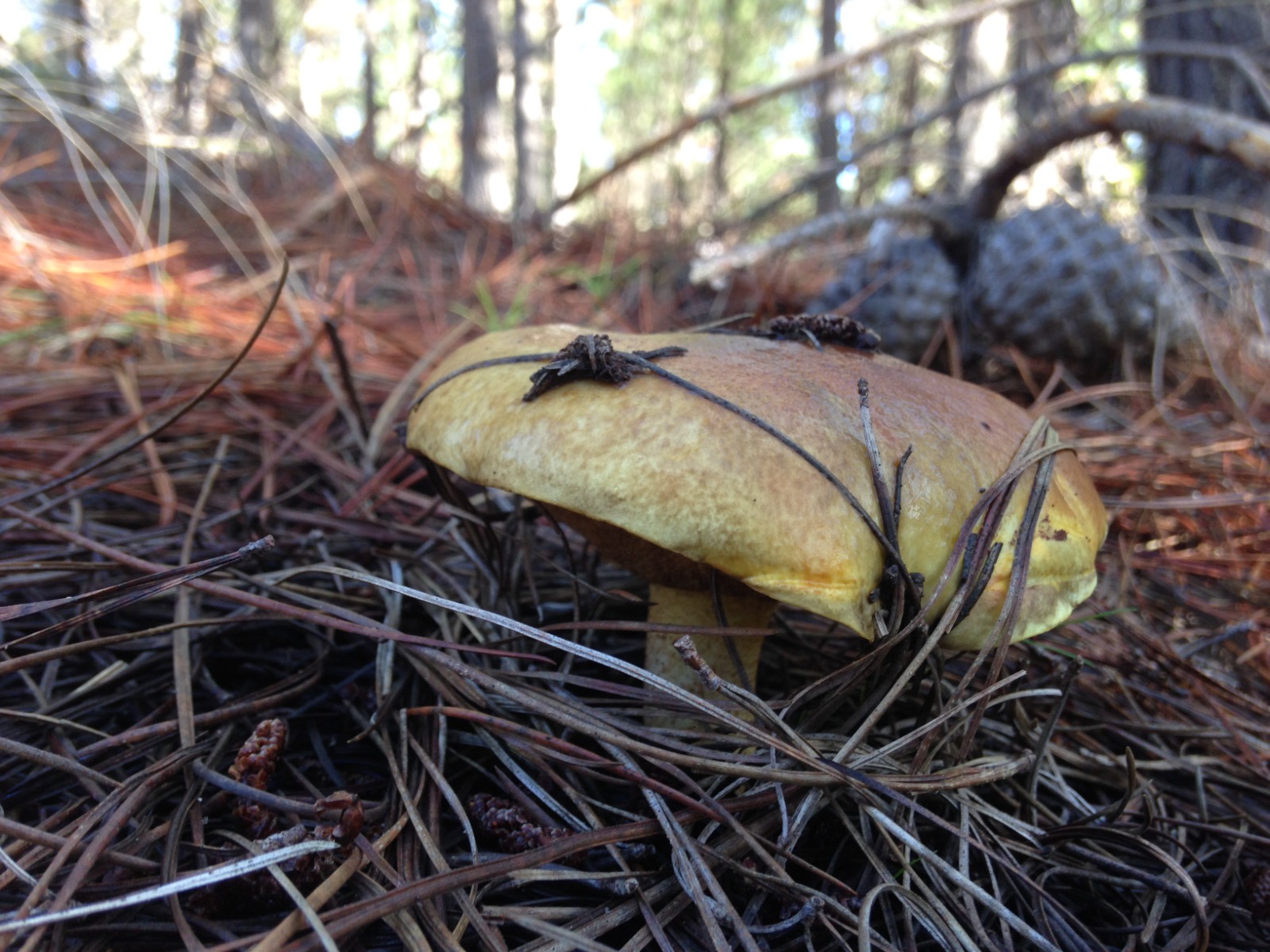
For decades, the Chilean forest has been associated almost exclusively with timber and pulp production. However, there exists a universe of products born among native trees, plantations, and forest ecosystems, whose economic and social value grows year after year.
These are Non-Timber Forest Products (NTFPs), an activity that today involves more than 200,000 people and opens new opportunities for rural communities.
Forest engineer and project director at the Forestry Institute (Infor), Gerardo Valdebenito, who coordinates the Forest Diversification area, explains that this concept began to consolidate in Chile about 25 years ago, when Infor promoted the first research efforts to identify the country's potential in this field.
Following the definition of the Food and Agriculture Organization of the United Nations (FAO), non-timber forest products correspond to all those goods derived from forests, wooded areas, and associated lands, other than timber. This category includes wild fruits, seeds, medicinal plants, mushrooms, bark, resins, and other natural products with food, pharmaceutical, cosmetic, and industrial applications.
"When we began studying this sector, we realized the enormous potential Chile had. Since then, we have not stopped researching, and today we see a much more consolidated sector with great growth possibilities," he notes.
Currently, Infor maintains a registry that gathers information on around 600 non-timber forest products, a figure that continues to grow as new uses, markets, and ventures emerge.
Global Markets
The sector's growth is also reflected in its economic figures. According to Valdebenito, NTPF exports average over US$80 million annually, while the domestic market represents approximately four times that amount.
Among the main exported products are Sphagnum magellanicum moss, quillay, rosehip, boldo, and various species of wild mushrooms. Added to these are fruits such as maqui, seeds, bark, and medicinal plants that reach highly demanding markets.
The United States, Taiwan, Germany, France, Japan, and more recently China, rank among the main destinations for these exports.
However, the specialist warns that the real challenge lies in moving away from exporting raw materials and advancing toward more processed products. "Today, about 60% of the business is still based on selling commodities. The great challenge is to add value, develop industrial processes, and capture a larger share of that wealth within the country," he argues.
As a successful example, he mentions the case of quillay. For years, Chile exported only its bark, but technological development made it possible to locally synthesize saponins, compounds used even in vaccines such as those developed during the Covid-19 pandemic.
That shift made it possible to multiply the product's value, establish new national industries, and generate jobs associated with more technologically sophisticated processes.
Rural Development
Another challenge promoted by Infor is the domestication of native species, seeking to move from wild harvesting toward planned production systems that can supply increasingly larger markets without affecting ecosystems.
Significant progress already exists in species such as boldo, quillay, Chilean hazelnut, and murta, in addition to research on cultivating wild mushrooms and developing the piñon pine.
Valdebenito also highlights the need to strengthen the organization of harvesters, promote cooperatives, formalize ventures, and improve public policies to fully integrate these products into native forest management.
Forest fires represent another major threat to this sector. In addition to affecting plantations intended for timber, they destroy habitats where mushrooms, medicinal plants, and other resources that sustain thousands of rural families grow. In many cases, the recovery of these ecosystems can take between six and seven years.
For this reason, various forestry companies and institutions have begun developing accreditation and training programs for harvesters, who also play an active role in fire prevention and early detection, becoming allies for forest conservation.
From Acoforag, we emphasize that non-timber forest products represent one of the greatest opportunities to diversify the Chilean forestry sector, generate local employment, and increase the forest's economic value without compromising its conservation.




Comments (0)
No comments yet. Be the first to comment!
Leave a comment