


By Ignacio Vera Izquierdo, general manager of Forestal Santa Blanca
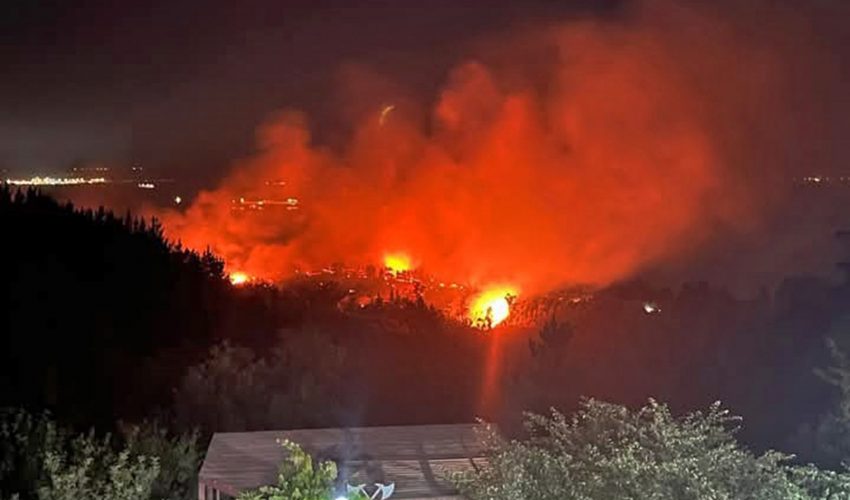
The increase in fine vegetation and undergrowth in central and south-central Chile, as a result of recent weather conditions, has created a high-risk scenario. When it dries out with the arrival of spring and summer, this biomass becomes a fuel that can trigger large-scale emergencies. In this context, prevention becomes an unavoidable duty for the industry, especially for forestry SMEs, which must anticipate with proper management of vegetation on their properties.
The need to strengthen preventive measures has returned to the center of parliamentary debate. The Senate Agriculture Committee and the Mixed Committee discussing the new Forest Fire Law are moving forward in defining requirements and responsibilities for landowners, with cross-party consensus among parliamentarians, the Ministry of Agriculture, Conaf and Corma on the urgency of coordinating public and private efforts. However, while Congress establishes the regulatory framework, the real challenge for medium and small producers lies in technical management on the ground: carrying out pruning, managing residues, reducing fuel continuity to prevent a surface fire from reaching the crowns, in addition to maintaining firebreaks and water points in critical areas.
Achieving high-level preventive standards entails a proportionally greater financial and operational effort for SMEs compared with the large players in the industry. While conglomerates such as CMPC and Arauco deploy million-dollar investments in infrastructure, drone monitoring and perimeter clearing, small and medium-sized properties must meet similar requirements with much more limited resources.
Added to this structural gap is a profound transformation in forest ownership in Chile. The process of monetizing forest assets by large companies has opened space for institutional investment funds, which already manage nearly 230,000 hectares, equivalent to 10% of the country's plantations. This scheme introduces an unresolved dilemma that goes beyond mere land ownership: the growing separation between the landowner, the holder of the trees, the fund manager and the company that processes the wood raises questions about who should assume and finance permanent fire mitigation measures.
In this new scenario, regulation cannot be limited to imposing more legal obligations. The sustainability of the sector will depend on how small and medium-sized landowners manage to finance and implement the required measures. Access to promotion instruments, specialized technical assistance and the promotion of associative models will be key to closing the gap with large corporations. With a season marked by a greater load of plant fuel and a regulatory framework under redefinition, the true shielding of forestry SMEs will lie in their ability to anticipate with silvicultural discipline, before fire turns prevention into tragedy.




Comments (0)
No comments yet. Be the first to comment!
Leave a comment