

When the first railway workers arrived at what would later become Loncoche and felled the first oak, a story began that, 126 years later, the municipality seeks to project into the future.
Mayor Alexis Pineda Ruiz uses a phrase attributed to local writer Abraham Navarro to describe that moment: when the first oak fell, "the heart of Loncoche beat for the first time."
Today, that heart has a considerable dimension. The commune has around 50,000 hectares of forestry plantations, mainly pine and, to a lesser extent, eucalyptus. In a city of approximately 30,000 inhabitants, the link with this activity is deep: according to Pineda, about half of the people of working age carry out activities directly or indirectly related to wood.
The chain includes cellulose, sawmills, silviculture, pruning, transportation and associated services. The municipal bet is to transform that reality into a productive and territorial identity.
A timber history
Loncoche's relationship with wood is linked to the advance of the railway toward the south. During the second half of the 20th century, industrial activity gained strength with local entrepreneurs such as Marcelo Fourcade, considered by the mayor to be one of the country's first great forestry entrepreneurs and a pioneer in the industrialization of forestry processes in the regions.
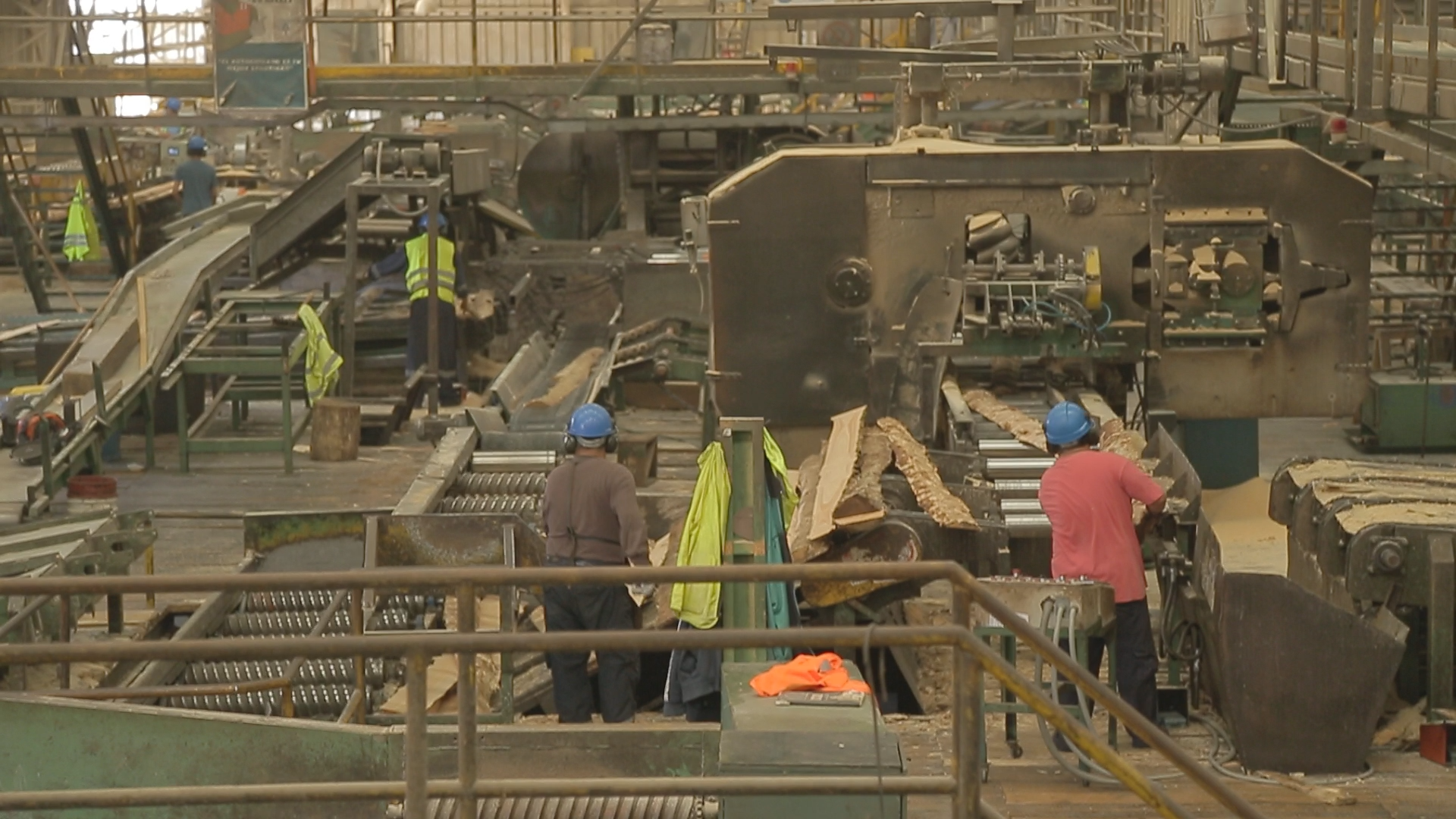
That tradition remains in the current Aserradero Loncoche, heir to that industrial history and which, according to Pineda, provides work to around 800 people.
"We have to communicate in a good way" the benefits of wood, proposes the mayor, who considers it a renewable raw material and an opportunity to develop new construction solutions and products with greater added value.
The goal, he maintains, is not simply to increase extraction, but to transform more wood in Loncoche and leave greater economic value in the territory.
A strategic hub
Loncoche has a privileged location next to Route 5 South, a railway connection and a location between La Araucanía and Los Ríos. This condition allows it to be projected as a articulation point for forestry activities in the southern macrozone.
In that context, the project to create a Wood Logistics Center arises, part of a master plan for the next ten years. The initiative seeks to bring together forestry machinery companies, panel manufacturing, construction wood, services and other activities in the chain.
The first step will be a feasibility prospecting. To this end, the municipality intends to work together with Corma and apply to a Corfo instrument that contemplates resources close to $300 million. Land would already be identified to develop the project.
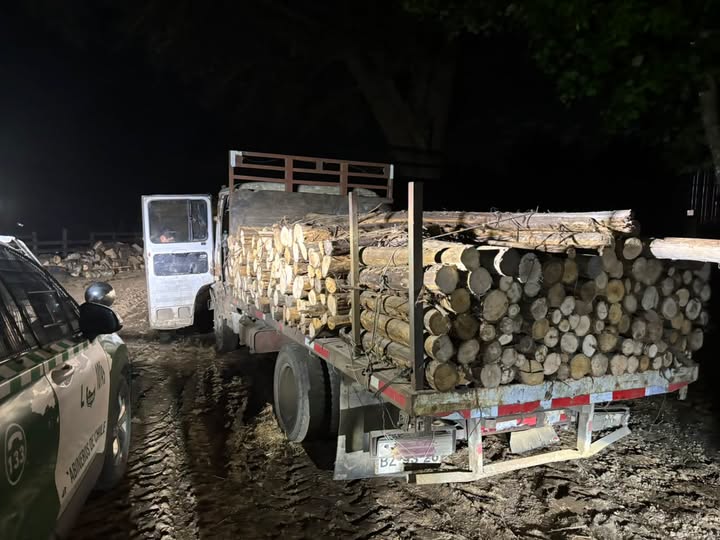
The proposal also considers adequate spaces for parking and truck rest, due to the intense traffic of drivers transporting wood and machinery during the night.
Contractors as allies
Loncoche does not want to build this strategy solely from the municipality and large companies. Here Acoforag appears, which, according to the mayor, was one of the first allies of the initiative.
Pineda highlights the experience of forestry contractors, many with 20 and 30 years linked to the sector, and considers that knowledge fundamental to understand the evolution of the industry and its challenges.
The municipality also seeks to incorporate small forestry owners so that the wood produced in the territory does not necessarily leave as raw material, but can be processed locally and become panels, furniture, construction solutions and industrialized products.
Training and future
Productive transformation requires prepared workers. Therefore, the municipality began conversations to adapt the offer of the Liceo Bicentenario Técnico Profesional Andrés Bello to the needs of this new stage.
Together with Acoforag, a visit was made to the establishment and it was proposed to advance toward a forestry technician specialty, in addition to strengthening training in electronics to respond to the new technologies of the operations.
The strategy also contemplates modernizing the high school's infrastructure and orienting its training toward an industry where wood has new uses, especially in construction.
The mayor points out that during the last five years the joint work between the municipality and large forestry companies allowed leveraging more than US$1 million in projects.
Among them he mentions a covered street close to $1,000 million, where a forestry company contributed $300 million, in addition to the Parque Bosque Diu project, with an investment of more than $200 million, along with scholarship programs.
Wood with added value
The final objective is to change the question: not only how much forest exists, but what can be done with that wood.
Loncoche looks at international experiences of wood hubs, particularly European ones, where small owners participate in industrial processes that generate value in the territories themselves.
The bet is that a growing part of the wood can be transformed in southern Chile, generating jobs, ventures and new opportunities. Pineda even projects educational and health establishments built or equipped with wood produced and processed in the area.
Thus, the 50,000 forestry hectares cease to be only a figure and become the starting point of a strategy.
Loncoche wants its history to beat again with wood, but this time with more industry, technology, training and added value.


Comments (0)
No comments yet. Be the first to comment!
Leave a comment