

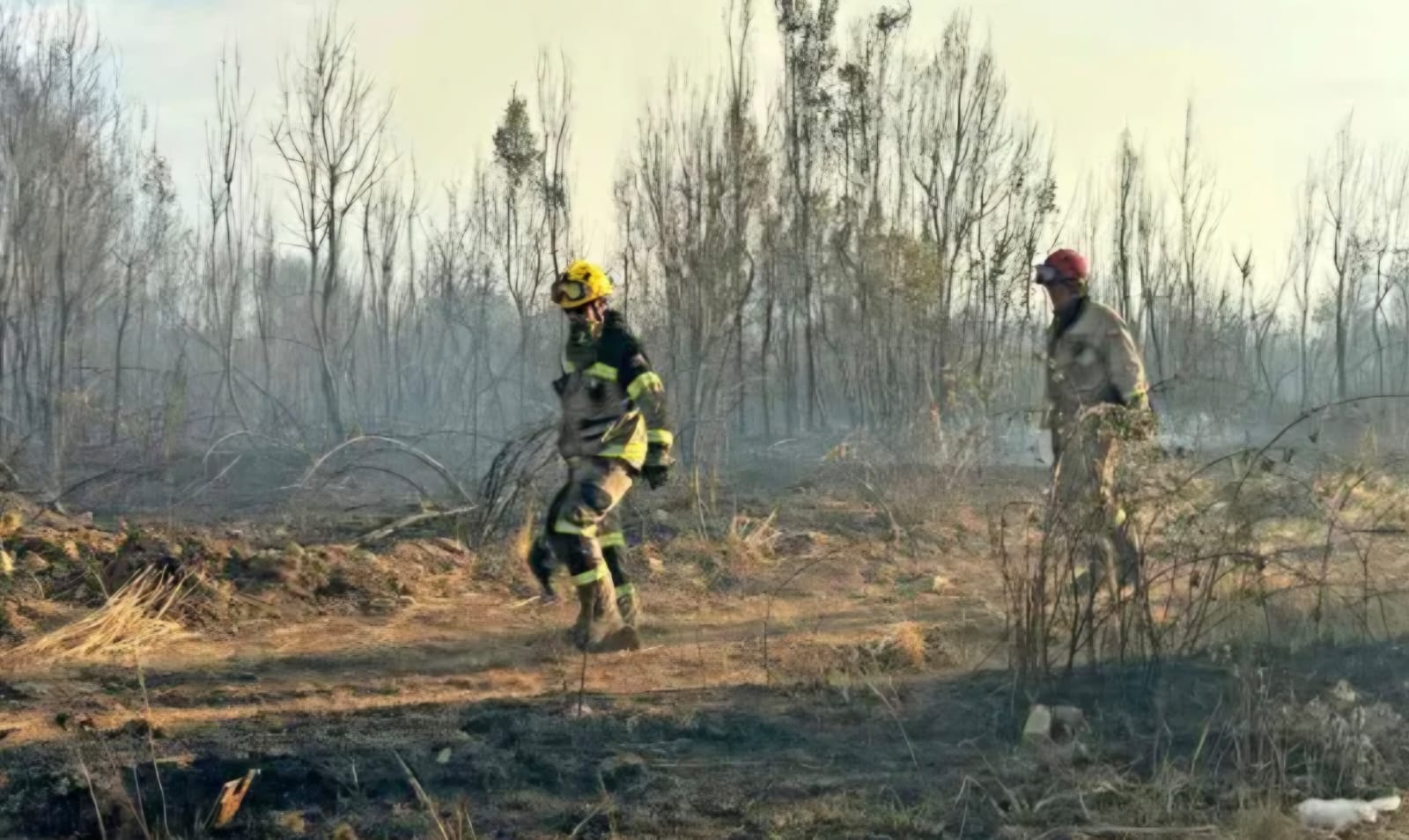
The meteorological projections for the coming months and the background on the intentional origin of fires keep rural producers in the southern macrozone on alert, where preparation for the forest fire season once again becomes one of the main concerns.
The combination of high temperatures, episodes of wind and abundant fine vegetation such as grass, which emerged after the intense rains and could turn into fuel during the summer, creates a complex scenario for the regions of Biobío, La Araucanía and Los Ríos.
In northern La Araucanía, the president of the Malleco Farmers Association, Sebastián Naveillán, warns that during the 2024-2025 season, 57% of the fires investigated in the province were intentional, although more than 400 were not investigated.
The leader thus calls for an exclusive prosecutor to be assigned to investigate the fires caused by third parties. He warns that, "despite the intentional nature of the fires, there are no people detained," beyond rural area workers, regarding whom negligent conduct has been determined, "but not people who end up being prosecuted for causing fire with the intention of causing damage to the properties."
Naveillán had indicated in March that about 70% of the fires recorded on agricultural properties incorporated into the Agri-Food Safety Plan—some 266 hectares during the harvest—corresponded to intentional acts, a situation that, in his view, requires greater attention from the authorities.
Everything on time
José Miguel Stegmeir, president of the Biobío Agricultural Society (Socabio), states that to face the risks of the season "it is important to have the forest brigades on time, the airfields and the water equipment prepared."
The second thing, he adds, is to have night ground brigades. "We require Conaf's capacity to work at night; nighttime control is easier, it is vital. We hope that this can be resolved this year, so that there are more shifts per day."
He, also vice president of the National Forestry Society, emphasizes that "police intelligence must be worked on. It is something that must be done right now with the communities, to know who enters the territories—and is not from the area—and who could be the cause of a fire." In that way, he states, "it is possible to know how the terrorists are organizing, which is always known in the communities themselves, in the countryside."
The concern also reaches other leaders in the sector
From the Chilean Wood Corporation (Corma) and the Temuco Agricultural Development Society (Sofo) they have insisted on the need to strengthen prevention, reduce combustible material and maintain coordination among public agencies, producers and communities.
Plan for $166 billion
Beyond the requests, this week the government plan for the next fire season was presented. It contemplates 3,778 Conaf brigade members, 77 aircraft, 340 television surveillance cameras and 26 night brigades, which will be deployed between Coquimbo and Magallanes. As for prevention, preparation with communities and schools is contemplated, as well as the construction of firebreaks and vegetation-free strips.
Source:El Mercurio




Comments (0)
No comments yet. Be the first to comment!
Leave a comment