
The Biobío Region recorded an unemployment rate of 10.6% during the mobile quarter of August-October 2026, which represents an increase of 0.6 percentage points compared to the same period of the previous year, according to the latest Employment Bulletin published by the National Institute of Statistics (INE).
The result reflects the difficulties facing the regional labor market, marked by a decrease of 4,736 employed persons in twelve months, equivalent to a contraction of 0.7%. At the same time, the number of unemployed persons increased by 5.5%, reaching a total of 83,618 people, that is, 4,367 more than a year ago.
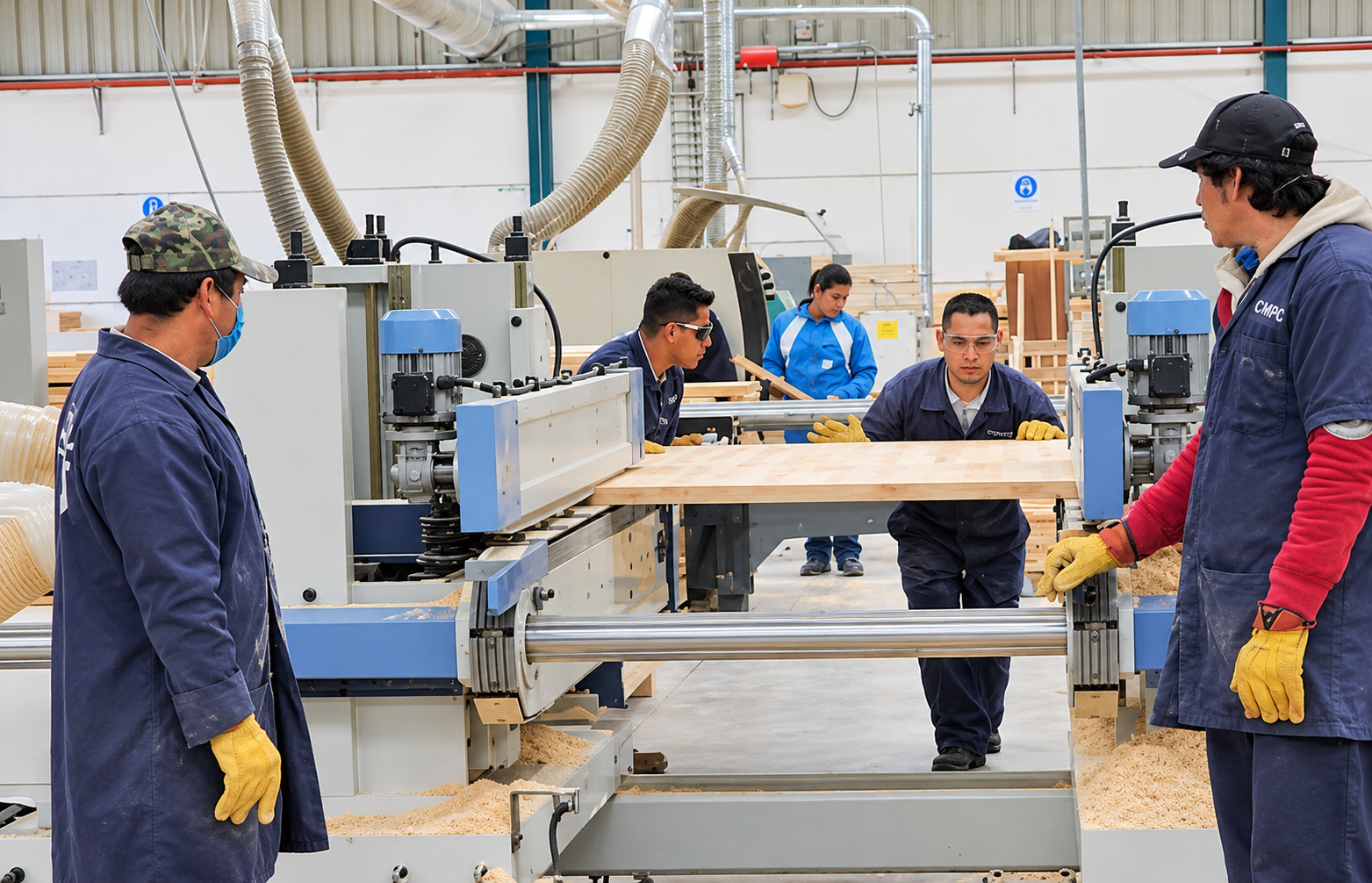
According to the agency, the decline in employment was mainly influenced by the manufacturing industry sector, which recorded a decrease of 9.5%, and education, with a decline of 7.6%.
In contrast, some activities showed positive behavior. Administrative and support services grew 17.4%, while accommodation and food services increased 8.6% compared to the same period in 2025.
Decline in formal employment
The report also warns of a 3.3% decrease in the category of formal salaried workers and 8.5% in domestic service personnel, groups that had a negative impact on the evolution of regional employment.
On the other hand, the categories of informal salaried workers and self-employed workers showed increases of 8.5% and 2.8%, respectively. This behavior is reflected in the rise in labor informality, whose rate reached 28.3%, with an increase of 1.5 percentage points in twelve months.
In terms of persons, informal employed workers reached 200,221, which represents an increase of 8,981 workers compared to the same period of the previous year.
The situation presents differences by sex. While the number of employed men decreased 2.4%, female employment increased 1.6%. However, unemployment among women still reached 10.6%, with an increase of one percentage point in twelve months.
In the case of men, the unemployment rate stood at 10.5%, increasing 0.2 percentage points. The INE also identified a strong influence of the manufacturing industry on the decline in male employment, with a contraction of 15.5%.
Unemployment and labor underutilization
Other indicators in the bulletin show that the difficulties of the labor market go beyond open unemployment.
The combined rate of unemployment and involuntary part-time work reached 17.3%, with an increase of 1.1 percentage points in twelve months. This reflects the increase in people who work fewer hours than they need or want.
Meanwhile, the combined rate of unemployment and potential labor force reached 20.6%, an indicator that includes people who could join the labor market but who are not currently part of the labor force.
Likewise, regional labor participation stood at 56.5%, while the employment rate reached 50.5%, both with year-on-year declines of 0.4 and 0.7 percentage points, respectively.
Biobío among the regions with the highest unemployment
In the national comparison, Biobío recorded an unemployment rate of 10.6%, placing it among the regions with the highest levels of unemployment. The figure was surpassed by Ñuble, which reached 11.6%; O'Higgins, with 11.3%, and Maule, with 10.9%.
At the national level, the unemployment rate reached 10%, with an increase of 1.6 percentage points in twelve months.
Thus, the results for the August-October quarter show a complex scenario for the Biobío labor market, with a reduction in employment, declines in relevant productive sectors and an increase in informality, factors that keep the regional employment situation among the main economic challenges


Comments (0)
No comments yet. Be the first to comment!
Leave a comment