
The University of Bío-Bío and the Regional Government of Ñuble held the seminar "Industrialized Wood: Driving the Construction Ecosystem," an initiative aimed at strengthening regional productive capacities, promoting the incorporation of technologies, and articulating collaboration opportunities to move toward a more efficient, innovative, and sustainable housing industry.
The event was held within the framework of the FIC project "Industrialization of Wooden Housing for the Ñuble Region," funded by the Regional Government and led by the academic from the UBB Faculty of Engineering, Dr. Carlos Rozas Mellado.
University knowledge at the service of territorial development
The Vice-Rector of the University of Bío-Bío, Dr. Carolina Flores Lueg, highlighted that the industrialization of wooden housing represents a strategic opportunity to transform Ñuble's forestry, productive, and technological capacities into new possibilities for development and social well-being.
The authority emphasized that this challenge goes beyond the incorporation of technologies, as it involves strengthening small and medium-sized enterprises, developing skills, improving productivity, and helping to respond to housing needs.
"As a state, public, and bi-regional university, we understand that our mission acquires full meaning when knowledge dialogues with the needs of the territories and contributes to transforming their realities. We want our academic, scientific, and technological capacities in wood, engineering, architecture, and construction to translate into concrete opportunities for Ñuble," she expressed.
Housing deficit and productive opportunities
The director of the FIC project, Dr. Carlos Rozas Mellado, explained that the seminar made it possible to link the country's housing needs with business capacities, available technologies, and public financing instruments.
"We want small and medium-sized enterprises to be able to recognize the opportunities generated by housing demand, understand how to engage with public agencies, learn about the technologies that would allow them to improve their productivity, and identify financing instruments to strengthen their capacities," he stated.
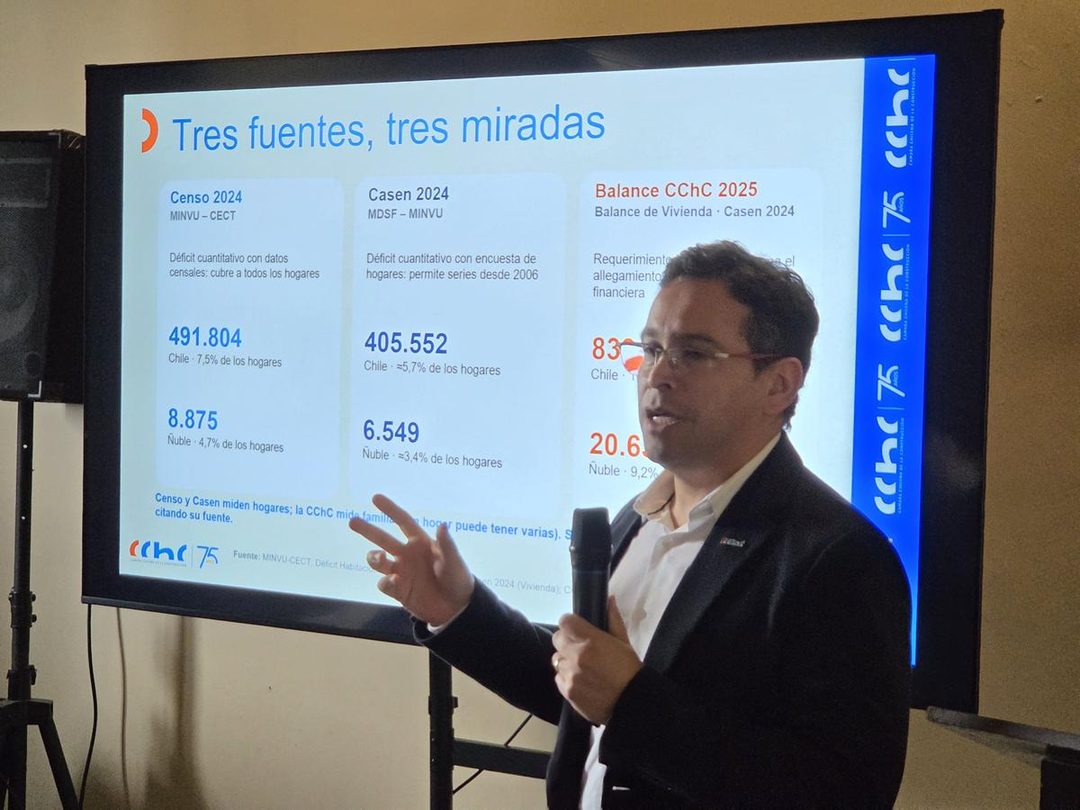
For his part, the regional president of the Chilean Chamber of Construction Ñuble, Ignacio Ruz Santana, presented a diagnosis of the housing deficit and the sector's projections.
"In Ñuble we estimate a housing deficit of close to 20,000 homes, a figure that reflects the need to move toward more efficient and sustainable solutions. Industrialized wood construction represents a concrete alternative to reduce execution times, optimize costs, and increase the sector's productivity," he stated.
The guild leader emphasized the need to secure financing and strengthen public-private coordination to expand the implementation of these solutions.
Concrete experiences and investment potential in Ñuble
The zonal representative of Tecnopanel for Maule, Ñuble, and Biobío, Guillermo Betancourt, presented experiences demonstrating the application of industrialized systems in housing projects.
He highlighted the company's participation in the reconstruction following the forest fires in Biobío, with close to 300 permanent homes and coordinated work with more than 35 construction companies, 20 sponsoring entities, Serviu, and municipalities.
He also presented the development of a project in Chiloé that contemplates 22 four-story modular buildings, built in wood.
"Industrialization in wood has ceased to be a pilot project and has become a reality. Today we are delivering high-standard permanent homes within limited timeframes and developing four-story modular buildings," he stated.
Betancourt also revealed that Tecnopanel is evaluating the possibility of installing a production plant in Ñuble, considering its forestry capacities, availability of human capital, and development potential.
"Ñuble brings together very favorable conditions for developing industrialized construction. As a company we are seriously evaluating the possibility of establishing a production plant in this territory, although there is still no decision or defined timeframe," he specified.
Currently, Tecnopanel has four plants in Chile, three in Santiago and one in Puerto Varas.
Technologies to improve productivity
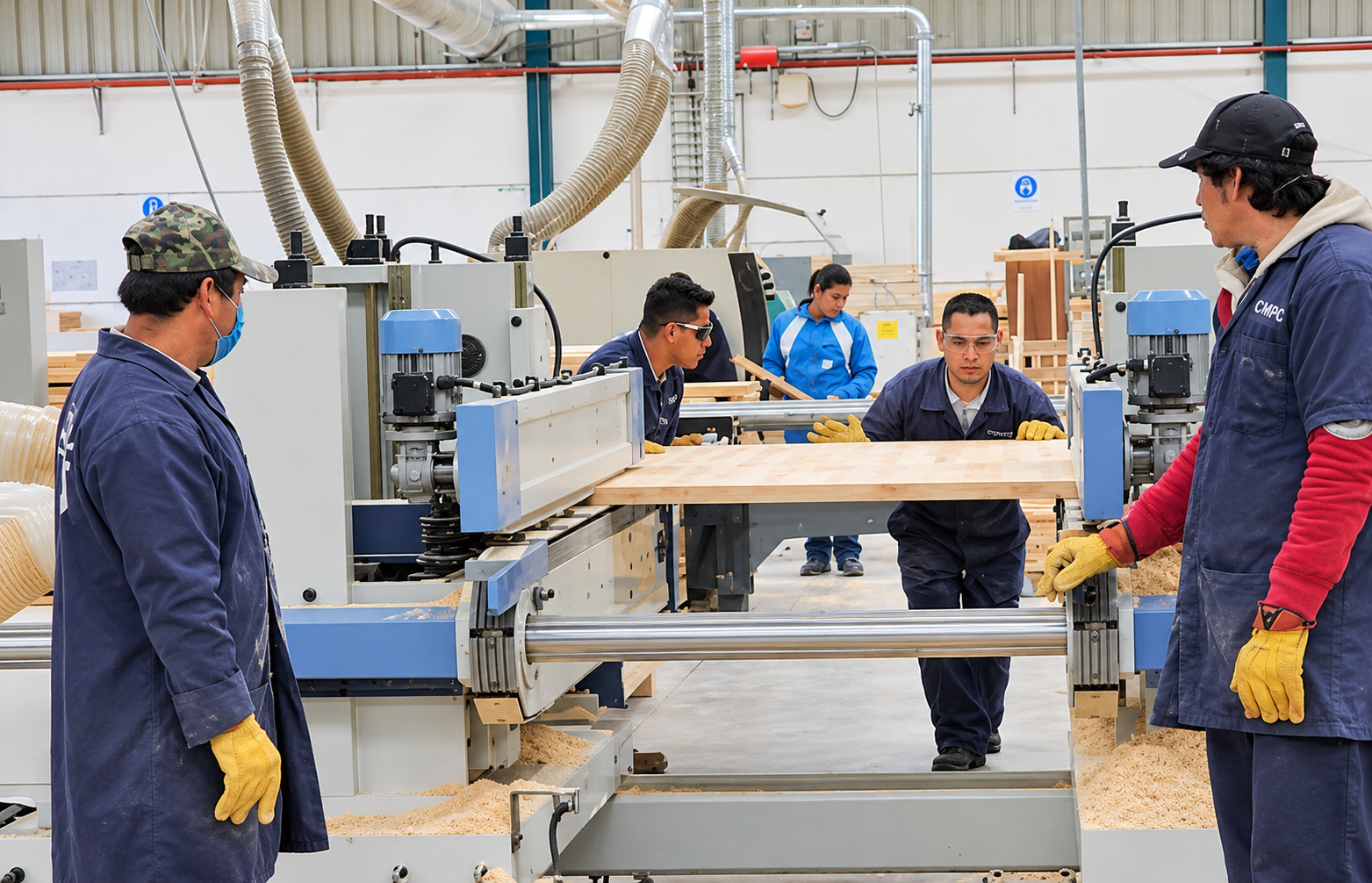
The representative of Hundegger for Spain, Portugal, and Latin America, Núria Solà Cols, presented automation solutions for the machining of wooden structural elements, including beams, timber frame structures, and cross-laminated timber (CLT) panels.
During her presentation, she shared experiences from Chilean companies that have incorporated Hundegger machinery, including Timber Limitada, Niuform, belonging to the CMPC group, and Tecnopanel.
"Industrialization makes it possible to move a large part of the construction process to a factory environment, where costs can be better controlled, errors reduced, and more precise delivery times established," she explained.
The specialist highlighted that these technologies can be adapted to the needs of each company, facilitating more efficient and standardized production processes.
Financing and articulation to strengthen the industry
The regional director of Corfo Ñuble, Rodrigo Landa Guiñez, valued the articulation driven by the UBB and the Regional Government, highlighting the instruments available to support business modernization.
Among them, he mentioned the Integrated Territorial Program (PTI) for Industrialized Housing Construction, as well as upcoming technology absorption and dissemination programs and support mechanisms for investment and innovation.
"From Corfo we are promoting instruments that can support companies in their investment, innovation, and technological development processes. We hope that these meeting spaces continue to be strengthened and allow us to identify new collaboration opportunities," he expressed.
He also announced a meeting for December 4, aimed at bringing together the sector's actors and agreeing on a common roadmap to boost the construction industry in Ñuble.
The event also included the working tables "Cadena Viva: Conecta, Resuelve, Construye" (Living Chain: Connect, Resolve, Build), facilitated by the consultancy Paola Otárola, aimed at promoting the exchange of experiences, identifying shared challenges, and strengthening the articulation of the regional productive ecosystem.


Comments (0)
No comments yet. Be the first to comment!
Leave a comment