

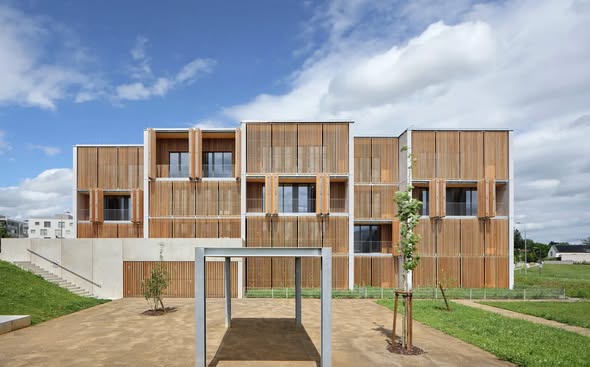
From buildings up to 22 meters high in the Czech Republic to biofuels that account for a third of Estonia's primary energy, a new report reveals that the forest industry is transforming into a sector of high technology, innovation, and climate resilience.
Wood is ceasing to be a mere extractive resource and is becoming a pillar of the sustainable economy in Europe.
According to the report Forest Tracks: Country Level Market Insights 2025/2026, the forest industry is undergoing a radical transformation that places it at the center of the regional green transition.
While traditional economic pressures persist (trade disruptions, GDP stagnation, and inflation), the sector is finding new life through low-carbon construction, renewable energy, and innovative bio-based products, states the document, drafted by the United Nations Economic Commission for Europe (UNECE).
Wooden buildings, energy, and carbon sinks
The report, based on raw data submitted by the 16 States* that participated in the report, reveals concrete examples of this paradigm shift.
In the Czech Republic, recent regulatory changes now allow wooden buildings up to 22.5 meters in height, representing a radical shift in urban development. In Estonia, solid biofuels account for more than a third of its primary energy production, demonstrating that wood is becoming indispensable for energy security.
"What we are seeing is a shift in focus: from mere extraction to high-tech innovation and climate resilience," the report notes.
In countries like Ireland, this transition is reflected in a growing focus on forests as carbon sinks, with measurable changes in forest carbon stocks supporting climate goals. Sweden, for its part, continues to integrate large-scale industrial forestry into highly efficient value chains.
Adaptation to threats and new regulations
The integration of the EU Deforestation Regulation and the Nature Restoration Law is driving a new era of supply chain transparency and the expansion of forest carbon credits. Even as biological threats such as the bark beetle plague in Central Europe or wildfires in the South affect harvest volumes, the sector is responding with greater resource efficiency and a move toward circular bioeconomies.
The data suggests that the next two years will be defined by how effectively these 16 countries leverage their wood resources (both inside and outside forests) to meet both economic demands and international environmental commitments.
Armenia, Austria, Cyprus, Czech Republic, Estonia, Finland, Germany, Ireland, Kyrgyz Republic, Netherlands, Poland, Portugal, Slovenia, Sweden, Ukraine, and the United Kingdom.
Source:Swisslatin





Comments (0)
No comments yet. Be the first to comment!
Leave a comment