

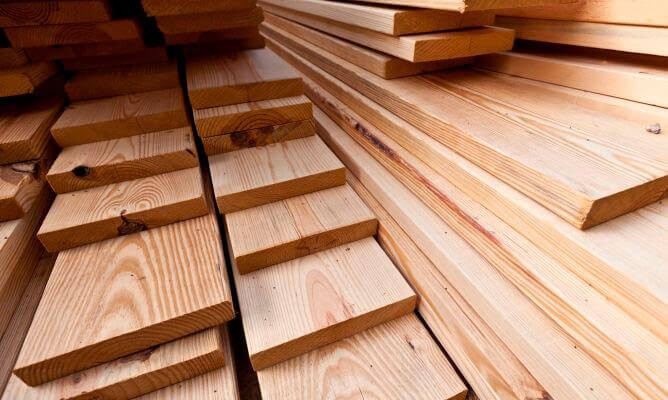
The forestry sector in the Biobío Region recorded a significant drop in its exports during May 2026, consolidating a negative trend that also affects the region's export performance. According to the latest bulletin from the National Institute of Statistics (INE), forestry shipments reached US$67.8 million, a figure representing a year-on-year decrease of 20.1% and losses of US$17.1 million compared to the same month last year.
Despite the setback, the sector remains one of the main economic drivers of Biobío. The forestry sector accounted for 21.2% of total regional exports and ranked as the third activity with the highest returns, behind the manufacture of cellulose, paper and cardboard, and the food sector.
The decline in the forestry sector was one of the factors influencing the decrease in regional exports, which totaled US$320.1 million in May, 16.1% less than in the same period in 2025. The Industry sector, which represents 96.6% of Biobío's foreign shipments, was primarily responsible for the decline, affected by drops recorded in food, forestry, and petroleum-derived products.
Sawn wood records the largest drop
Among forestry products, sawn wood showed one of the most pronounced declines. During May 2026, it exported US$26.3 million, representing a decrease of 35.5% compared to the same month last year, equivalent to US$14.5 million less. This product accounted for 8.2% of the region's total exports.
Likewise, other wood products also recorded declines:
- Wood fiberboard: US$11.2 million (-26.8%).
- Plywood: US$10.2 million (-19.7%).
- Wood profiles and moldings: US$5.9 million (-30.0%).
However, some products showed positive results. Exports of wooden doors grew 13.5%, reaching US$5.2 million, while particle boards increased 10.3%, totaling US$3.1 million. Additionally, non-coniferous raw wood recorded shipments worth US$4.9 million, a product that had no exports in May 2025.
Cellulose continues to lead regional exports
Despite the contraction scenario, cellulose remains the main export product of Biobío. In May, it accumulated returns of US$130.1 million, equivalent to 40.6% of the total regional exports. However, this figure represents a 5% drop compared to the same period last year.
At the economic activity level, the manufacture of cellulose, paper and cardboard reached exports of US$135.9 million, accounting for 42.4% of regional exports and consolidating itself as the main exporting sector of Biobío.
China remains the main market
The main destination for regional exports continues to be Asia, which accounted for 45.2% of Biobío's shipments. China led international demand with purchases of US$90 million, equivalent to 28.1% of the region's total exports, followed by the United States and South Korea.
The INE data reflects that, although the forestry sector remains one of the pillars of the regional economy, it faces a scenario of slowdown in international markets, particularly in wood products with a higher level of processing, which directly impacts Biobío's export performance during the current year.







Comments (0)
No comments yet. Be the first to comment!
Leave a comment