

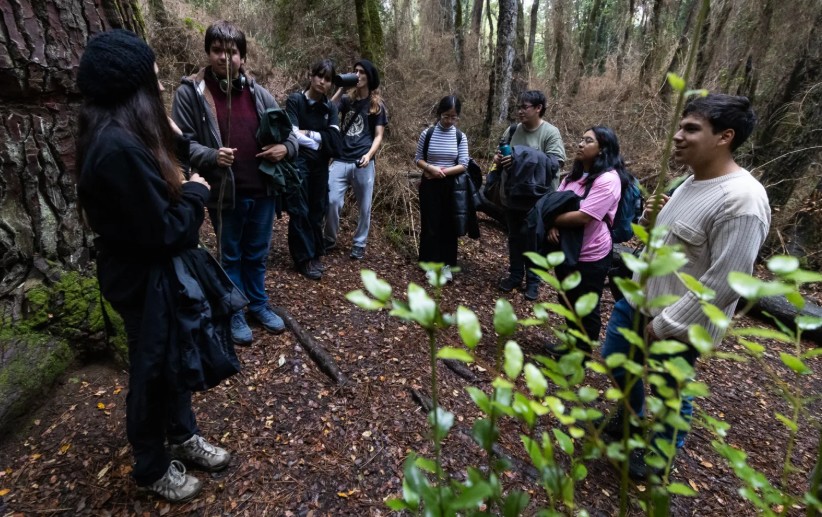
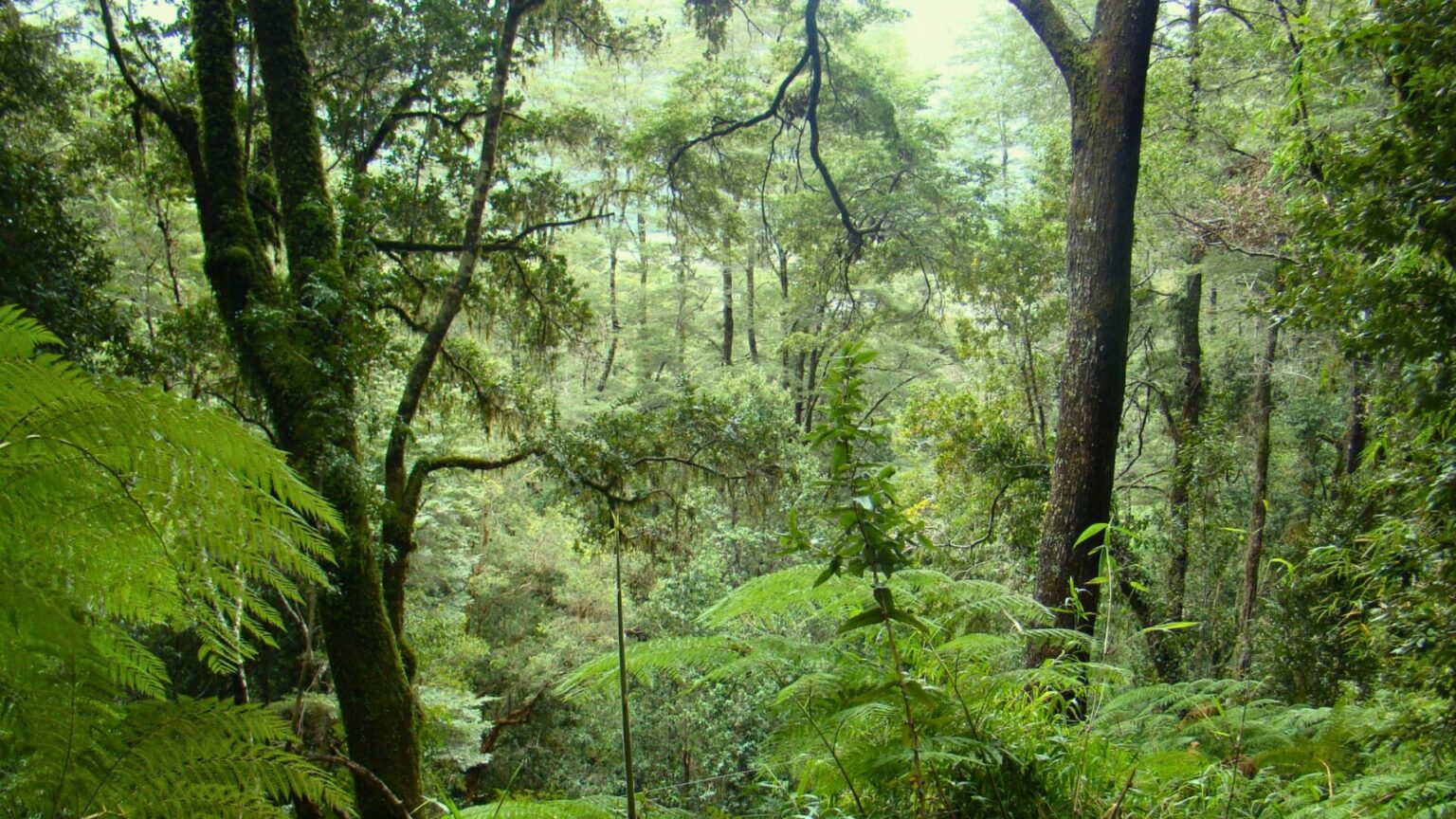
The search for scientific evidence behind the well-being reported by practices such as forest bathing –Japanese shinrin yoku– and other forms of connection with nature is the focus of interest of the Bosques y Salud (Forests and Health) research and teaching group recently created at the Universidad de Concepción.
The initiative not only seeks to understand the real effects of exposure to natural environments on people's health, but also to delve into the specific elements that produce them, the mechanisms involved, and how long their benefits last.
The Dean of the Faculty of Forest Sciences, Eugenio Sanfuentes von Stowasser, one of the drivers of the initiative, explained that the idea is to contribute from an interdisciplinary perspective to the understanding of the link between natural environments and human health in its different dimensions, answering the scientific questions behind this relationship.
Researchers from the faculties of Forest Sciences, Medicine, Biological Sciences, and Pharmacy are part of this project, which, in addition to developing research, hopes to impact undergraduate and postgraduate teaching.
The academic commented that from this work, training opportunities are envisioned, such as complementary or elective courses, and even the development of some type of minor in the future.
Outreach actions have also been considered, among which a seminar on wood and health stands out, scheduled for March 2027.
"We will have a Norwegian specialist who will come to talk about experiences carried out in Europe on the use of wood in clinical settings, which has had measurements of the beneficial impact on people," the dean announced.
Positive impacts
Research on the relationship between forests, the environment, and health has grown in the last decade, with results showing positive impacts at both physical and psychological levels.
The Forest Sciences academic, Rodrigo Hasbún Zaror, who will collaborate in the evaluation of compounds released by trees and their relationship with forest biodiversity, cited as an example what has happened with shinrin yoku. Studies have shown effects on psychological well-being, stress perception, and relaxation, as well as some responses of the autonomic and neuroendocrine nervous system, along with changes in certain immunological parameters.
"However, these results must be interpreted with caution. Because a transient reduction in cortisol or stress indicators does not mean that a forest prevents or treats a disease," he said.
That is why it is important to understand the scientific evidence, based on hypotheses that can be tested and answer questions regarding measurable effects on the organism, how they are generated, and what scope they have, among others; but also what type of environments or compounds have an impact on health.
This implies integrating disciplines that have traditionally studied ecosystems and human health separately, a challenge addressed by the new university group.






Comments (0)
No comments yet. Be the first to comment!
Leave a comment