

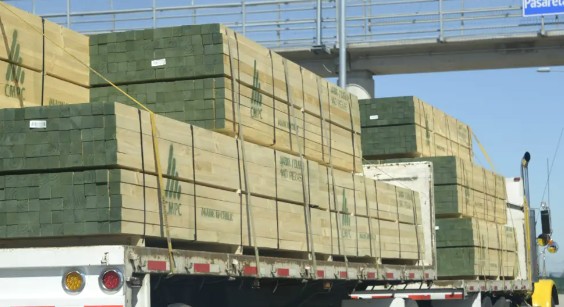
For decades, the forestry sector has played a significant role in the economy of the Biobío province. Its activity generates jobs, mobilizes services, and maintains a close relationship with the region's port infrastructure and logistics.
This scenario was addressed during a session of the Biobío 2050 Cycle, where authorities and industry representatives analyzed the conditions needed to project the sector over the coming decades.
Regional governor Sergio Giacaman stated that the activity remains an economic engine for the region, although it requires incorporating new alternatives to generate value.
"The development of timber construction is important, the development of the heating industry through pellets is important, as well as other initiatives that can be generated based on this sector," he expressed.
The authority linked these alternatives to the need to promote innovation and move toward sustainable development of the industry.
Giacaman described the current scenario of the sector, noting that "today it is the engine of our economy, but the current formula is becoming exhausted and requires a fresh approach."
In that context, he proposed incorporating new products and processes as a way to strengthen the activity. Among the areas mentioned were timber construction and pellet production.
The governor recalled that forestry development has contributed to strengthening the ports and the region's logistics capacity, so changes in the industry have effects on other economic activities.
REGAINING TRUST
The mayor of Los Ángeles, José Pérez, focused on the effects of intentional fires and the difficulties the sector faces during the summer season.
In an interview with Diario La Tribuna, he stated that this situation has generated concern among companies linked to the activity and raised the need to regain trust to maintain investments.
"I believe that people in the forestry sector will regain confidence, which is tremendously important because it generates a lot of work and a lot of resources for the country," he stated.
The mayor called on the private sector to maintain confidence and develop new investments in the commune. In his view, improving prevention and response conditions against fires is necessary to provide greater security to the activity.
Pérez warned about the risk of companies reducing their production or moving operations to other places, a situation he attributed to the difficulties the sector currently faces.
CONNECTIVITY AND REFORESTATION
The projection of the forestry sector was linked by Giacaman with other opportunities for the province, including agriculture, connectivity, and the connection with Argentina through the Pichachén border crossing in Antuco.
The governor highlighted that the border complex will be upgraded and mentioned the progress associated with the road project that will improve the connection to that point.
Added to this is the announced support for the recovery of land affected by fires. The Regional Government has committed resources for reforestation and support for small and medium-sized landowners.
Giacaman noted that the province has opportunities across its various productive sectors and that the Regional Government's work reaches all 14 of its communes.
During the session, the authority raised the need to incorporate innovation into the sector and mentioned as alternatives the development of timber construction, the heating industry through pellets, and other initiatives that allow adding value to the activity.
The discussion included matters related to the continuity of forestry activity, the recovery of land affected by fires, job creation, and the incorporation of new productive areas.
Source:La Tribuna





Comments (0)
No comments yet. Be the first to comment!
Leave a comment