

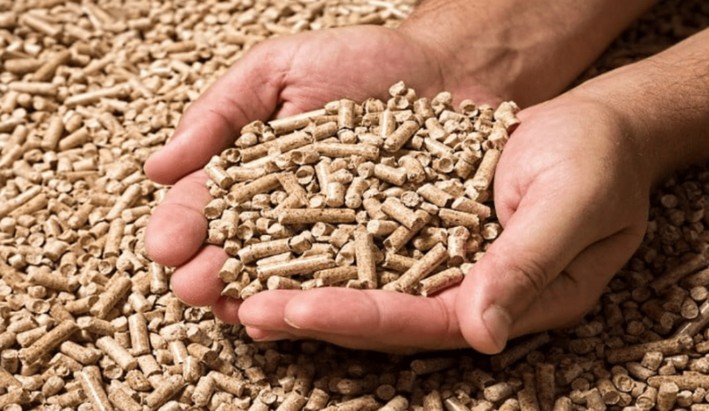
The search for new biomass sources could become an alternative to strengthen the Chilean pellet industry and reduce its vulnerability to periods of high demand during winter. Agricultural and forestry residues, as well as invasive plant species, are among the raw materials that various studies have identified as potential inputs for producing this biofuel.
The director of the Energy Center at Universidad Católica de la Santísima Concepción (UCSC), Dr. Laura Azócar, explains that there is a wide availability of resources that can still be energetically valorized. Among them is wheat straw, a residue generated in large quantities that in some areas ends up being burned, with the consequent environmental and fire risks.
The researcher also mentions hazelnut shells and other locally available biomass. Added to these is retamilla, an invasive species associated with the spread of forest fires and which, according to studies conducted by her team, presents suitable characteristics for use in pellet manufacturing.
An industry conditioned by seasonality
However, expanding the available raw materials would not by itself resolve the difficulties the market occasionally faces. One of the main factors behind supply problems is the marked seasonality of consumption.
During the warm months, some plants reduce or even halt their activity due to lower residential demand. Added to this is the fact that part of the production may be destined for international markets. When winter arrives and the need for heating rapidly increases, supply must respond to a completely different scenario.
For Azócar, this behavior also raises a discussion about the environmental footprint of exported pellet. Although this biofuel presents advantages associated with biomass use, its transport to distant markets incorporates emissions derived from maritime shipping and the use of fossil fuels.
More storage and stable demand
Faced with this scenario, one alternative is to anticipate supply. The specialist suggests that families can purchase pellet during the summer to have reserves before the months of highest consumption begin.
But there is also a challenge for producers and institutions: creating conditions that allow for more stable activity throughout the year. One option would be to expand pellet use in industrial sectors, creating demand that is less concentrated in the residential heating season.
Storage also appears as a key piece. Increasing warehouse capacity would make it possible to preserve part of the production generated in summer during the months of lower consumption and have it available when demand rises.
Thus, the challenge for Chile is not only about producing more pellet during winter. Diversifying biomass sources, transforming residues into energy resources, taking advantage of invasive species, and improving production and storage planning can contribute to building a more stable and resilient chain, while also reducing the environmental impact associated with residues that today remain underutilized.




Comments (0)
No comments yet. Be the first to comment!
Leave a comment