

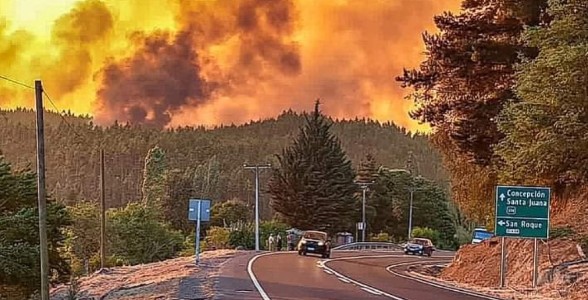
Although the province of Biobío recorded 31% fewer forest fires during the last season, the affected area increased by 59%. This apparent contradiction leaves a first warning sign for the upcoming summer: a lower number of incidents does not necessarily mean that the impact of fire is lesser.
Added to this is a climate scenario that could increase risks. The rains forecast for November and December associated with the El Niño phenomenon could favor vegetation growth and leave a greater amount of available fuel when the months of higher temperatures arrive.
That is why, while fire has not yet appeared with force in the province's forests, preparation began several months ago. Firefighters, aircraft, machinery, and prevention teams are part of a deployment aimed at facing the most complex period, when high temperatures and wind can quickly change the conditions of a fire.
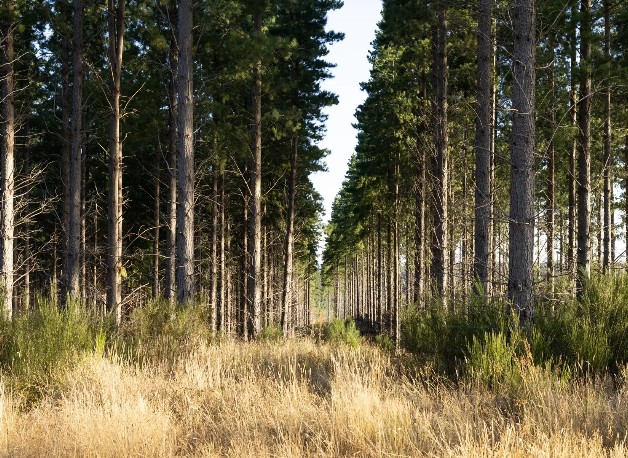
Ramón Vallejos, provincial head of the National Forestry Corporation (Conaf) Biobío, explained that the characteristics of this season could extend the risk period.
"We are going to have a slightly rainier summer during the months of November and December, but that entails that we will have a longer summer. The particularity of the El Niño phenomenon is that we will have greater heat spikes and higher temperatures, and at the same time, with so much rain, we will have a greater amount of fuel load. There will be more vegetation and, when the season of January, February, and March arrives, that fuel will be available so that forest or vegetation fires can occur."
FEWER FIRES, BUT MORE AFFECTED AREA
During the 2025-2026 period, the province of Biobío recorded 362 forest fires, a 31% decrease compared to the previous season, when 522 incidents were counted.
However, the affected area showed the opposite trend. The fires damaged 6,587.25 hectares, 59% more than the 4,152.70 hectares reached by fire during the 2024-2025 period.
The figures show that lower occurrence does not necessarily translate into a less damaging season. A single large-scale fire can considerably alter the provincial balance.
This is what happened during the last period with the fire recorded in the Chillico sector, in Laja, which by itself contributed nearly 4,000 hectares to the affected provincial area, according to Vallejos.
Reality, however, is not homogeneous across the entire territory. There are communes where the main problem is not necessarily in the extent reached by the flames, but in the frequency with which fires occur.
Ramón Vallejos, provincial head of the National Forestry Corporation (Conaf) Biobío, explained that the characteristics of this season could extend the risk period.
"We are going to have a slightly rainier summer during the months of November and December, but that entails that we will have a longer summer. The particularity of the El Niño phenomenon is that we will have greater heat spikes and higher temperatures, and at the same time, with so much rain, we will have a greater amount of fuel load. There will be more vegetation and, when the season of January, February, and March arrives, that fuel will be available so that forest or vegetation fires can occur."
Los Ángeles appears as one of the main points of concern. Sectors such as Villa Génesis and Las Tranqueras historically concentrate a high occurrence of incidents. The territorial extension of the commune and the presence of rural areas and subdivisions make preventive work especially relevant.
"Los Ángeles is one of the communes with the highest number of fires. Every year, between 120 and 150 fires are recorded. Although it has not had as much burned area, it is indeed the commune with the highest recurrence,"
Vallejos pointed out.
THE ORIGIN OF FIRES
Prevention especially targets daily activities carried out in rural areas and interface sectors. Burns, work with tools that generate sparks, welding, land clearing, and even barbecues can become the starting point of a fire when they coincide with adverse weather conditions.
According to Vallejos, Conaf's cause determination unit has detected an increase in fires associated with negligence, including trash burning and work carried out without the necessary safeguard measures.
"We have had an increase in negligence. There are people burning trash, doing work with tools that generate sparks, or carrying out activities in subdivision sectors. With extreme heat conditions and strong winds, a spark can end up generating a forest fire."
Although human action explains the vast majority of incidents, the reality of the mountain communes presents a particularity.
Conaf informed La Tribuna that during 2026, lightning associated with thunderstorms caused six of the seven forest fires recorded in Antuco and one of the six that occurred in Alto Biobío.
Fighting becomes even more complex when fire starts in remote or hard-to-reach sectors. In the province, there are areas where the entry of ground teams can take longer, while vegetation and slopes increase the difficulties in controlling the flames.
PREVENTION ALL YEAR ROUND
In this context, Conaf's strategy is not limited to having brigades available when a fire is declared. Throughout the year, work is done with communities in the 14 communes of the province located in sectors of greater vulnerability due to their geographical conditions.
Currently, the province has 92 prepared communities, where workshops are developed so that residents can identify risks and improve safety conditions around their homes.
"We work with people on the concept of a fortified home. In sectors where we have greater vulnerability and higher occurrence of forest fires, we hold preparation workshops, review the risks that exist around homes, and work on community self-protection."
The goal is for residents themselves to reduce the available fuel around their homes before the critical period begins. A seemingly simple measure, such as keeping grass short and removing plant material near a home, can be decisive against the advance of flames.
"Grass of one meter or one and a half meters is completely different from having it at ten centimeters. The grass is going to burn, but if it is low, it burns quickly and will not necessarily reach a house. On the other hand, if people do not self-protect and do not remove the plant material next to their homes, the houses can also burn."
A PROVINCE PREPARING FOR THE CRITICAL PERIOD
While prevention seeks to reduce occurrence, the second front is having sufficient capacity to respond when fire appears.
The recruitment process for this season began in August. Conaf reported that it includes the hiring of 191 firefighters on temporary wages, distributed across various positions, including brigade chiefs, crew chiefs, chainsaw operators, motor pump operators, and forest firefighters.
The provincial structure includes helitack, mechanized, and ground brigades, as well as water tanker trucks.
Added to this is the operability of the Duqueco Air Base and the María Dolores airfield, where helicopters and aircraft will remain available to support forest firefighting.
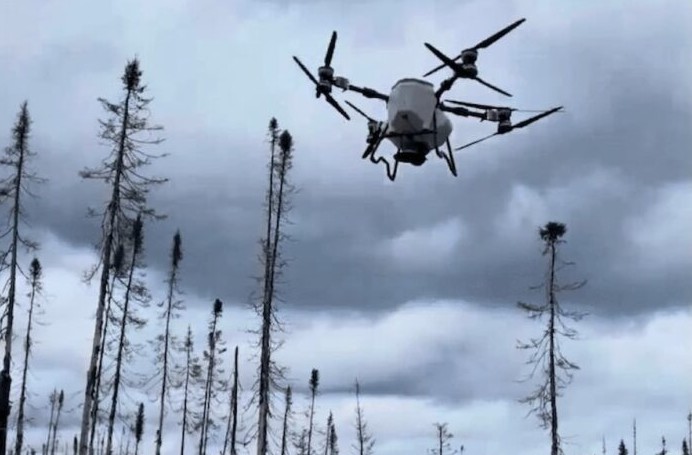
Among the resources are medium-heavy helicopters with an approximate capacity of between 4,000 and 4,500 liters using the Bambi Bucket system, especially useful for responding to emergencies in mountain sectors.
A C-130 Hercules aircraft will also be incorporated, with the capacity to transport and drop up to 15,000 liters of water, which, according to information provided by Conaf, will have the María Dolores airfield as its operating base.
From the corporation, however, they warn that having aircraft does not mean that a fire can be resolved solely from the air. Ground work remains essential for controlling emergencies.
"Fires are not put out only with water. If there is no control line made manually by ground brigades, the fire is not considered contained or controlled. Aircraft are support to lower the heat intensity and allow brigades to work with greater safety."
THE CHALLENGE OF PREVENTING FIRE
From the forestry sector, they agree that the discussion cannot focus exclusively on the number of planes, firefighters, or vehicles available.
Ramón Figueroa, deputy manager of Fire Protection and Prevention at Arauco and president of Corma's Forest Protection Department, states that the main success indicator should be how many fires were prevented.
According to him, nearly 99.7% of fires are related to human action, whether through negligence, accident, or intentionality.
"Success is not putting out more fires; success is preventing this from happening. Practically 99.7% of fires depend on human action, whether negligence, intentionality, or accident, and this reality forces us to change our approach. Forest or vegetation fires are not natural disasters in their origin and, therefore, we must address their cause."
For the Corma representative, international experience also shows that no firefighting system has infinite resources. Europe and North America have had to face large fires during the last year despite having significant numbers of aircraft and equipment.
The problem worsens when several large fires occur simultaneously and force the distribution of available resources across different points.
"Europe and North America have faced large-scale fires this year, with millions of hectares affected, thousands of people evacuated, and enormous deployments of ground and air resources. This shows that no extinction system is infinite and that, when there is simultaneity of large fires, available resources can be quickly exhausted."
PREVENTION AS THE FIRST LINE
In Biobío, the strategy for this season therefore involves a combination of factors: preparation of brigades, availability of aircraft and machinery, coordination between institutions, and mainly prevention.
Conaf has already begun recruitment and maintains activities with communities throughout the year. It has also carried out preventive works, including more than 70 kilometers of firebreaks during 2026, as well as clearing and mitigation work on roads.
Since 2024, a coordinated system to address forest fires has also been in effect through a unified command made up of Conaf, Corma, and Bomberos de Chile, organizations that coordinate actions and define the response strategy for each emergency.
The goal is to reach the most complex months with conditions as controlled as possible, but also with communities capable of acting preventively when the simultaneity of fires prevents teams from arriving immediately to all sectors.
That is precisely one of the scenarios that most concerns: several fires occurring at the same time, under conditions of strong winds and high temperatures, forcing prioritization of territories and distribution of resources.
"We always try to be as prepared as possible, but we always depend on conditions. Resources are scarce, they are not unlimited. When we have repeated occurrence or several fires at the same time, we will not be able to reach some sectors immediately depending on their remoteness. That is why the community also has to be prepared and know how to self-protect."
The calendar still provides room to reinforce these measures. According to Conaf, after mid-November conditions begin to become more complex, and December marks the entry into the highest-risk period.
Rains can increase vegetation, high temperatures can increase the availability of that fuel, and wind will continue to be one of the most difficult factors to control.
In that scenario, the province's challenge will not only be having the capacity to quickly extinguish a fire, but also reducing the chances of it starting and preventing it from finding vulnerable communities and territories when it does occur.
As Figueroa states, the success of a season should not be measured only by how many fires were controlled, but by how many were prevented.
Source:La Tribuna



Comments (0)
No comments yet. Be the first to comment!
Leave a comment