

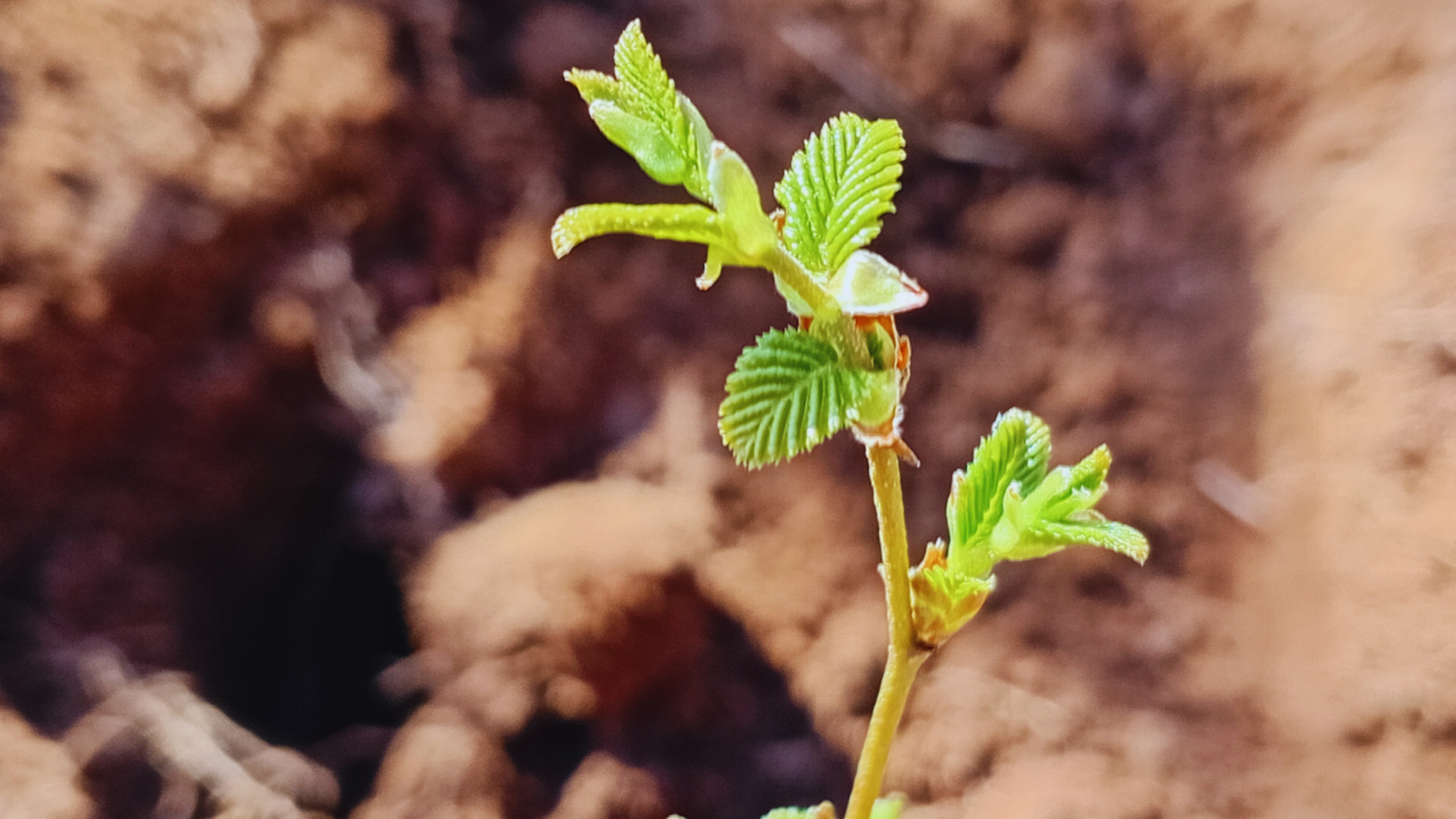
A new alternative for productive afforestation with native species has begun to be developed in the commune of Saavedra, La Araucanía Region, with the establishment of a demonstration stand of Roble × Raulí hybrids, an initiative that seeks to evaluate in the field the behavior and growth potential of this genetic material as a future option for landowners interested in diversifying their plantations.
The experience is being carried out at the El Refugio de las Vertientes property, where during 2026 one hectare will be established with more than one thousand Roble-Raulí hybrid plants, generated through vegetative propagation at the Laboratory of the Center for Genetic Development and Propagation of Native Species in Valdivia, within the framework of the agreement with the Forest Genetic Improvement Cooperative.
The initiative is part of the FIA project "Generation of a new afforestation option using roble x raulí hybrids, as an alternative of high productivity and sustainable adaptation in the face of climate change scenarios," whose purpose is to generate new alternatives for timber production, initially from Los Ángeles southward, bringing research results to real field conditions.
The objective is to take advantage of complementary attributes of both species. While Roble has a wide territorial distribution and growth characteristics, Raulí stands out for the properties and quality of its wood, its growth and straightness. The evaluation of these hybrids will allow knowing their performance under different site conditions and advancing in the selection of those materials that present the best characteristics.
The academic from Universidad Austral, Fernando Droppelmann, explained that the stand will allow observing in the field the potential of this alternative. "What we are looking for is to combine the best attributes of the parental species," he said, highlighting that from Raulí the aim is mainly to rescue its timber properties, while Roble contributes, among other attributes, its wide geographic distribution.
The researcher added that this material considers both hybrids that occur naturally and those obtained through controlled crossings, as well as clonal trials where the material presenting the best attributes of both species is evaluated and selected.
For CONAF's regional director, Héctor Tillería, this experience constitutes a step toward the diversification of the alternatives available for productive afforestation in the region. "The idea is to be able to carry out an experience in this stand and also prepare ourselves for a new forest promotion law, incorporating technology and new diversification species for the productive decisions of a landowner who wants to afforest in the La Araucanía Region," he stated.
Tillería also highlighted the support provided by CONAF for the establishment of the plantation, particularly regarding protection, through perimeter fencing, mesh and stakes, with the purpose of favoring the establishment and development of the plants. "We are very hopeful of being able to achieve with this plantation, for productive purposes, an alternative for landowners, so that they dare to afforest with native species here in the La Araucanía Region," he affirmed.
The property where this experience is being developed already has a significant area destined for afforestation with native species. Through the 2025 Public Competition of the Más Bosques Program, its owner established 18.5 hectares with nuclei of species such as Olivillo, Laurel, Arrayán, Canelo, Coihue, Luma, Temu, Tineo and Murta.
For Jorge Daube, owner of El Refugio de las Vertientes, the experience represents an opportunity to demonstrate that native forest species can also constitute a productive alternative. "The idea of carrying out these forest clone trials is to have an alternative for the country, to demonstrate that there is a possibility that native forest species can be commercial and that the country has another afforestation alternative," he stated.
The establishment of this demonstration stand thus constitutes a new line of work for CONAF, aimed at evaluating afforestation alternatives with native species of productive characteristics, incorporating innovation, genetic improvement and adaptation to climate change scenarios. Its results will allow generating information on the behavior of these hybrids and providing background for future afforestation decisions and sustainable management of forest resources.



Comments (0)
No comments yet. Be the first to comment!
Leave a comment