

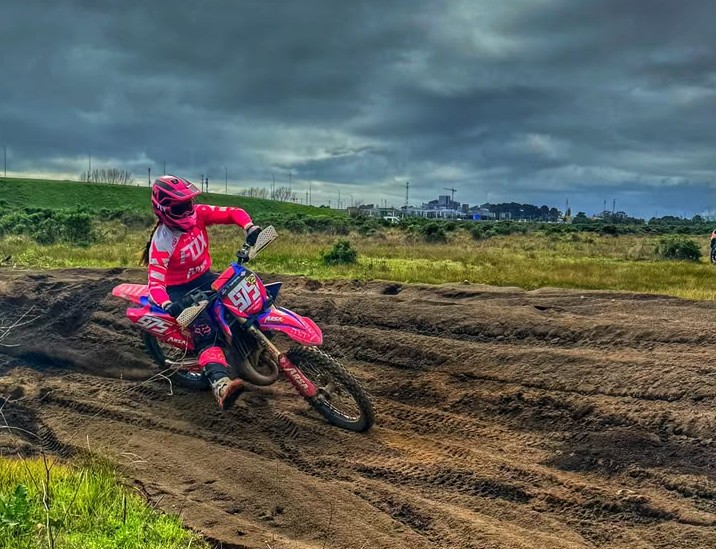
For Leslie Aranda, president of Team Mujeres Riders Chile, the forest has never been just the setting where she practices enduro. It is the place where she finds freedom, disconnects from routine and shares with other women a passion that she has transformed into a commitment to nature.
"What we do in enduro is much more than riding a motorcycle. It is freedom, a connection with the environment and, above all, respect for nature," she summarizes.
At 37 years old, Leslie has been competing in motocross and enduro for nearly six years, although her history with motorcycles began much earlier. "I learned to ride a motorcycle when I was about 10 years old. My dad taught us along with my brother. Then many years passed until I started competing," she recalls.
Today she leads Team Mujeres Riders Chile, a group that brings together about 20 women from different regions of the country. "I formed this team to give women a space, so they could feel comfortable in this world, which is still much more about men than women," she explains.
Shared respect
Every training session and competition begins by respecting a fundamental rule: caring for the environment. The routes are previously authorized, delimited and signposted to avoid any intervention outside the established circuits.
"We have open spaces to train and the tracks are marked. We don't go outside those parameters. Where the track is marked, that's where you go. We don't invade an area to destroy it or anything like that," she states.
Many of these routes cross private properties or land managed by forestry companies, always with the authorization of their owners.
For Leslie, that responsibility is born from the very essence of the sport. "We are extremely interested in taking care of nature because it is part of us. If we don't have the hills, where do we ride? Where do we train?" she poses.
And she adds that the forest represents much more than a circuit. "It is not just a place to ride through on a motorcycle. There we live our passion, we share with our friends and we reach wonderful places that often cannot be known any other way."
Much more
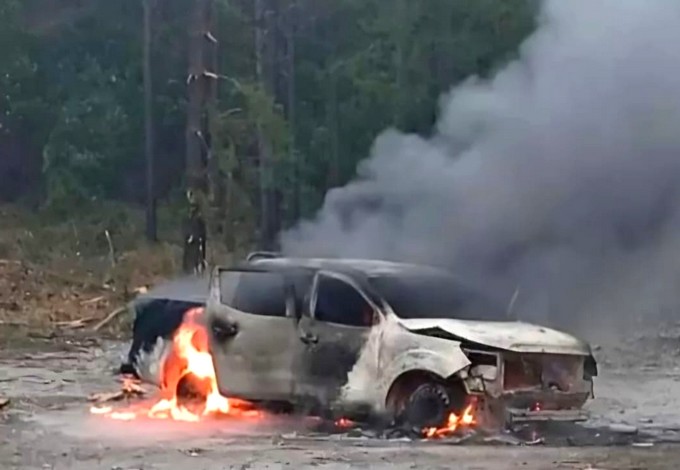
The forest fires left a deep mark among those who practice enduro. Many of the trails where they trained disappeared under the fire. "We were all devastated because they were our training places. But they were also places where we found tranquility and that special connection with nature," she recalls.
The experience reinforced the group's environmental commitment. "We ourselves take on that responsibility as athletes. If we do this sport it is because we are lovers of nature. Otherwise, we would be doing karting in a cemented space," she comments.
That commitment also involves those who accompany the competitions. "Most have the commitment to take their trash with them and care for the environment. The culture that exists among us is to take care of the place where we are."
Outside the stopwatch, the spirit of enduro changes completely. "If someone gets stuck, the other helps them, pushes them or gives them a ride on their motorcycle. A true brotherhood forms," she relates.
At Acoforag we value the commitment of Team Mujeres Riders Chile to the care of the forest heritage. Their example shows that sport and conservation can go hand in hand when respect for the forests becomes an essential part of the sporting culture itself.



Comments (0)
No comments yet. Be the first to comment!
Leave a comment