
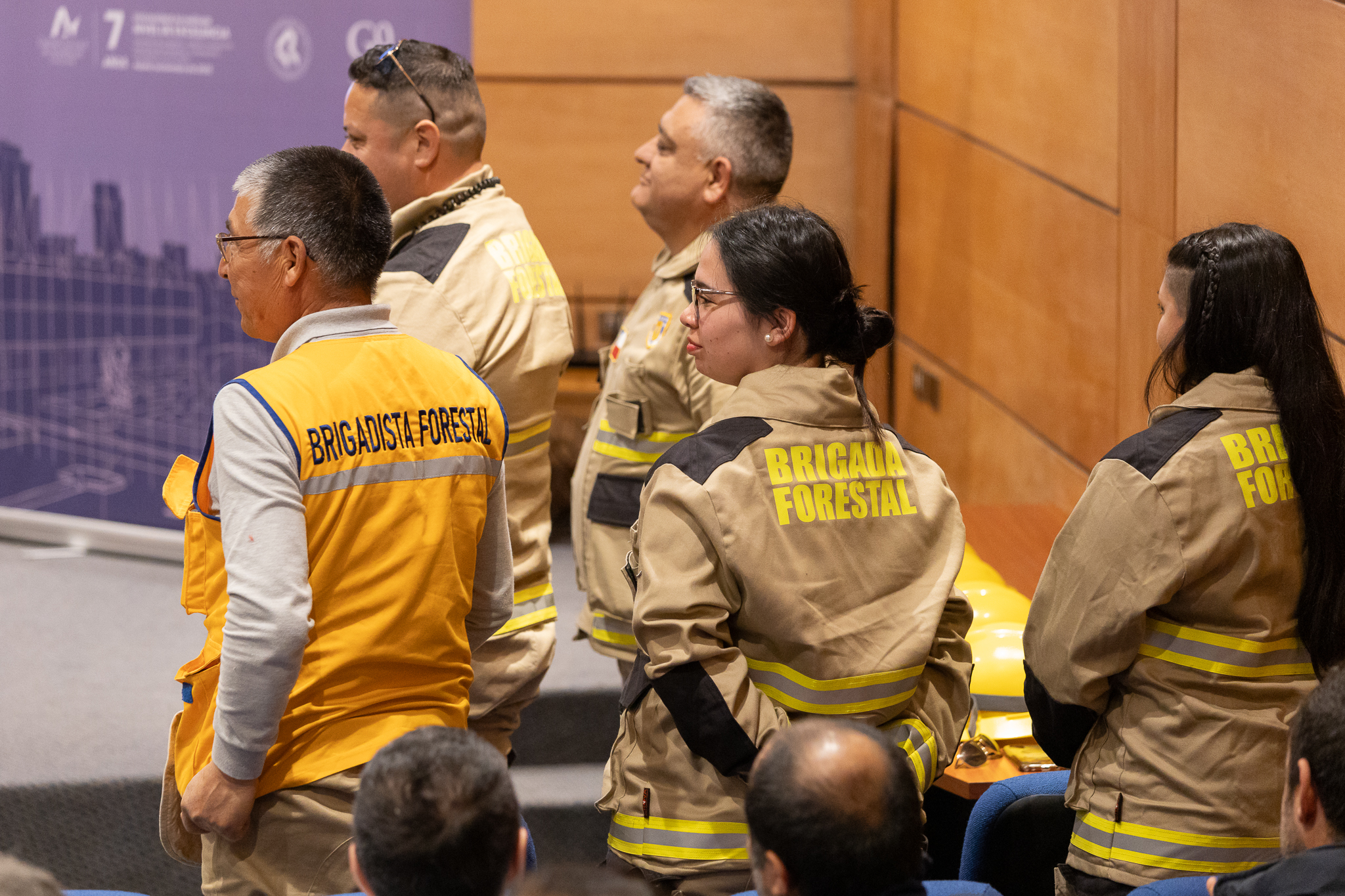
Permanent monitoring, joint work, and prevention and mitigation actions are the foundation of the 2026-2027 Forest Fire Protection Program of the University of Concepción.
Three years ago, the Directorate of Services began this planning, with central axes of prevention, mitigation, preparation, and response, each with its own action measures.
"These actions are part of a comprehensive disaster risk management strategy, aimed at reducing the occurrence of forest fires and strengthening prevention and response capacities for the upcoming season," said the person in charge of Properties and Forest Management of the UdeC Directorate of Services, Juan Emilio Espinoza Carvajal.
These measures have been of utmost relevance in the nearly 1,700 days without forest fires recorded by the University of Concepción. Looking ahead to the 2026-2027 season, the coordinated work with state institutions and neighbors from communities surrounding the Concepción Campus, the institution plans to carry out more than 1,200 preventive patrols. This will be done on land with a forest brigade dedicated exclusively to the season, and in the air using drones.
The objective is to promptly identify risk conditions and strengthen protection, "taking into account that each year the season becomes more complex, due to climate change, the high degree of intentionality we have here in the commune and in the region, and the exposure of our campus to the wooded area," acknowledged Espinoza.
Additionally, it is contemplated to reduce the vegetal fuel load by more than 200,000 m², through the construction of protection rings and weed removal work in internal sectors of the campus, property roads, and interface zones, an action that will be carried out with the support of the goat brigade.
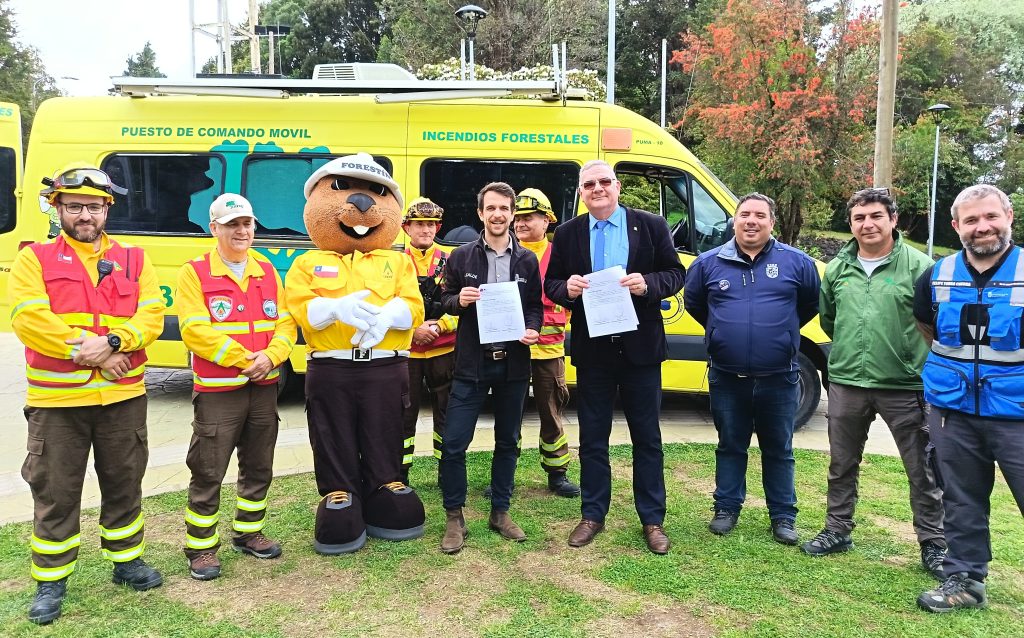
The University, acknowledges the director of Services Luis García Santander, is not only the campus for staff and students, "but is also inserted in the surroundings with the communities, such as Lo Pequén, Valle Nonguén, Los Lirios, and Agüita de la Perdiz, which in turn interact with the external community, such as the Fire Department, Carabineros, the Municipality, or Conaf."
For García, the work of the Directorate of Services focuses on preventing and collaborating. With the proposed surveillance, they seek to reduce the risks "that may exist regarding our campus and also the communities that are nearby in the surroundings."
Innovations of the 2026 – 2027 Plan
"In the long term, it is expected to advance toward the creation of protection rings and multi-aged stands (trees of different ages and sizes), managed with lower density and continuity of vegetation, especially in sectors close to the community. This strategy seeks to reduce the load and horizontal continuity of vegetal fuel and, with that, contribute to reducing the speed and spread in the event of forest fires. At the same time, it is projected to progressively advance in the replacement of exotic species with native species," explained Espinoza.
Among the mitigation measures, this year a pilot program with a sprinkler system will be implemented, water sprinklers that will be located on critical infrastructure near the campus trees. This measure seeks to increase the protection of facilities against forest fires, particularly in scenarios where the projection of embers can generate secondary outbreaks and increase the risk of ignition of structures.
The good goats return
Momoa, Chimpi, Murti, Flosie, and a great team from Buena Cabra return to the Concepción campus to support prevention measures. They help reduce ground-level fuel, working on terrain that could be risky for humans due to its slope.
"The most affected is fine fuel, which for us is everything less than 2.5 centimeters in diameter," highlighted the professor from the UdeC Faculty of Forest Sciences, Eduardo Peña Fernández. This becomes highly important if we analyze that 70% of fires pass beneath the forest, according to the researcher specializing in forest fires and fire ecology.
Dead fuel burns under any condition, but live fuel, the green fuel, "if there are flames, is also capable of losing its moisture and finally burning. Additionally, it sometimes has a greater amount of flammable elements, such as oil or resin," he highlighted, adding that approximately from the year 2000 onward the greenhouse effect is noticeable, due to the increase in temperature.
"As temperature increases, fuel moisture decreases. It is a fact that previously the fire season lasted between December and February, and ended on March 15, and as a result of this climate change, the fire season now begins in October and ends in April," reflected Peña.
Therefore, led by Momoa, the goat brigade will carry out maintenance of the safety strip associated with the medium-voltage line, an intervention that contemplates an estimated area of 22,500 m².
Additionally, the Disaster Risk Reduction Fair is being held again, which in 2026 will have its 3rd edition. It includes the participation of entities linked to emergency situations, as a way to strengthen institutional and community ties. In this way, the University of Concepción connects with its community, fulfilling the sustainable development objectives that are part of the Institutional Strategic Plan and reaffirming a collective commitment of mutual support in emergencies.




Comments (0)
No comments yet. Be the first to comment!
Leave a comment