

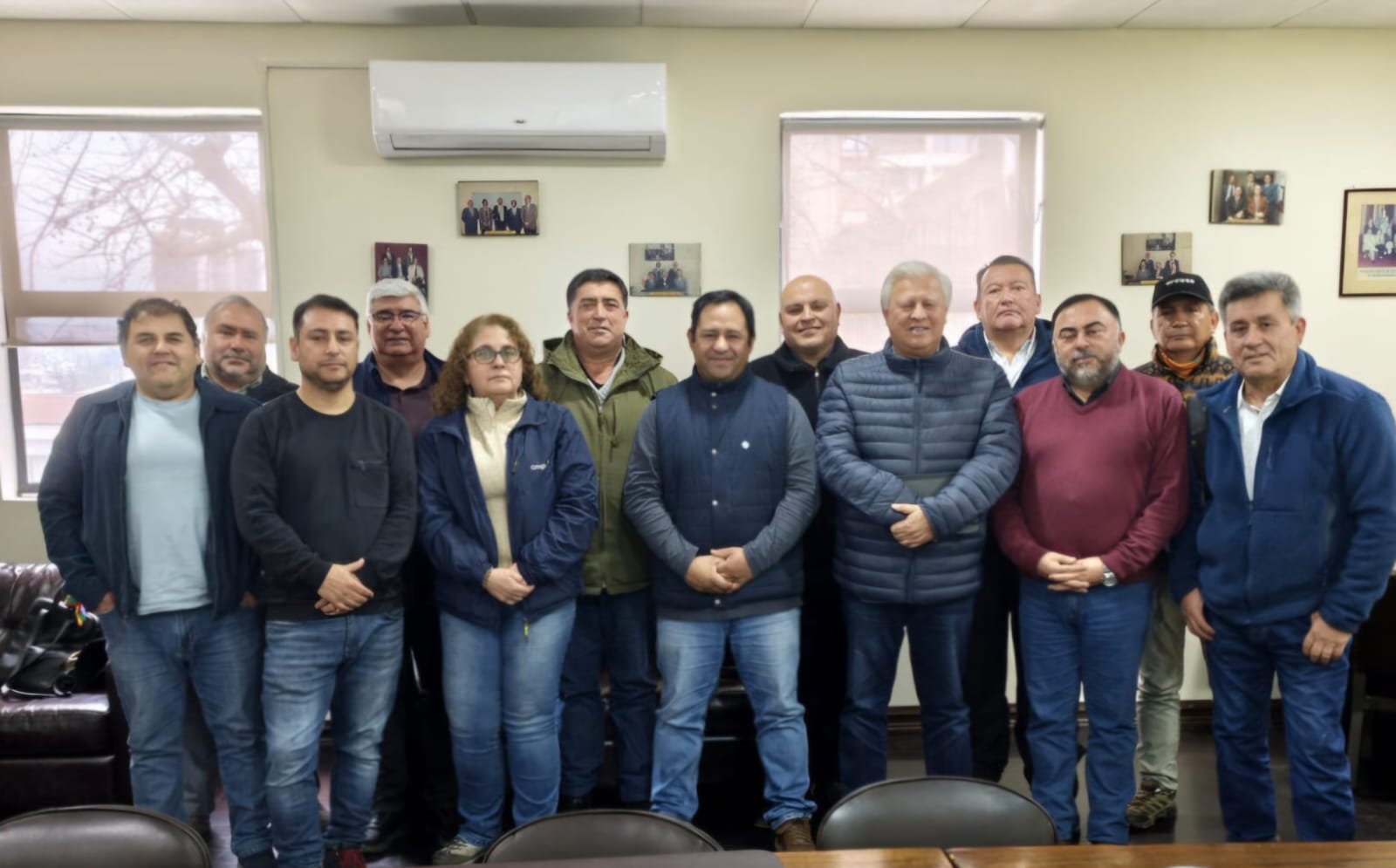
A forestry sector working group was established in the Biobío region to address the decline in employment that has affected the activity in recent years and to coordinate proposals among workers, companies, and authorities.
The initiative brings together representatives from unions, forestry transport federations, forest workers, and pulp industries, who raised the need to advance measures that strengthen the production chain and recover the sector's job creation capacity.
The president of the National Federation of Forestry Transport and Forestry Workers Unions (Fenasitransfor), Heriberto López, valued the creation of this space and highlighted the importance of incorporating the perspective of those who are directly part of the activity.
"We were summoned or self-summoned to this employment board in the region, and honestly, as an organization, we are happy to participate because we believe we can make a contribution regarding the visions we have of the forestry world and how the sector contributes to the country," said López.
The union representative stated that "what we discuss here, I have no doubt, will become a contribution that someone will have to channel so that it is heard and results are obtained."
Regarding the objectives of the initiative, he added that "the results are, first, to reach majority agreements among those of us who participate. Second, that the material worked on is taken seriously and is somehow channeled to those who make decisions," he stated.
CONCERN OVER FORESTRY EMPLOYMENT
The president of Union Number 1 of Celulosa Arauco Workers, José Guiñilén, explained that the board arises from a shared concern among the different actors in the sector, due to the reduction of jobs that has impacted families linked to this activity.
"We have the same problem, which is the decline in employability in the forestry sector. Political decisions, decisions by big business—we have to do the analysis, but certainly what we can conclude from this is that it is affecting families that depend on the most important business in the region," he noted.
The leader stated that one of the main challenges is generating coordination that allows presenting proposals to the Executive and advancing measures for productive recovery.
"We want to work on greater promotion than what exists in the regional government to recover burned soils, so that jobs can be created again and the production chain can start to have a bit more competition and once again be the lung or the green engine of the region," Guiñilén stated.
During the meeting, matters related to labor rights and worker participation in decisions involving the future of the sector were also addressed.
LOSS OF MORE THAN 2,000 JOBS
Senator Gastón Saavedra participated in the initiative and highlighted the concern expressed by the leaders due to the loss of job sources recorded in the Biobío Region. "This is a very interesting meeting with the union leaders of the forestry sector, who are concerned about the loss of jobs that have occurred in the Biobío region, over 2,000 positions that have been lost, 2,000 people who have been left without work," he noted.
The parliamentarian also addressed the need to promote the recovery of areas affected by forest fires and strengthen conditions so that the activity can resume its contribution to regional development.
"Everything related to promoting reforestation in places that are still in that condition since 2023 due to the fires, and the effects that could occur in the sector, are part of the main concerns of the workers," he stated.
Saavedra added that the discussion also considers the potential effects of labor modifications on matters such as working hours, unionization, and wage levels.
Participants agreed that the sector requires a long-term vision, considering the economic and social impact that forestry activity has in Biobío.
The board will continue developing proposals with the aim of generating agreements among workers, companies, and authorities that strengthen the sector and recover employment opportunities in the region.
Source:La Tribuna






Comments (0)
No comments yet. Be the first to comment!
Leave a comment