

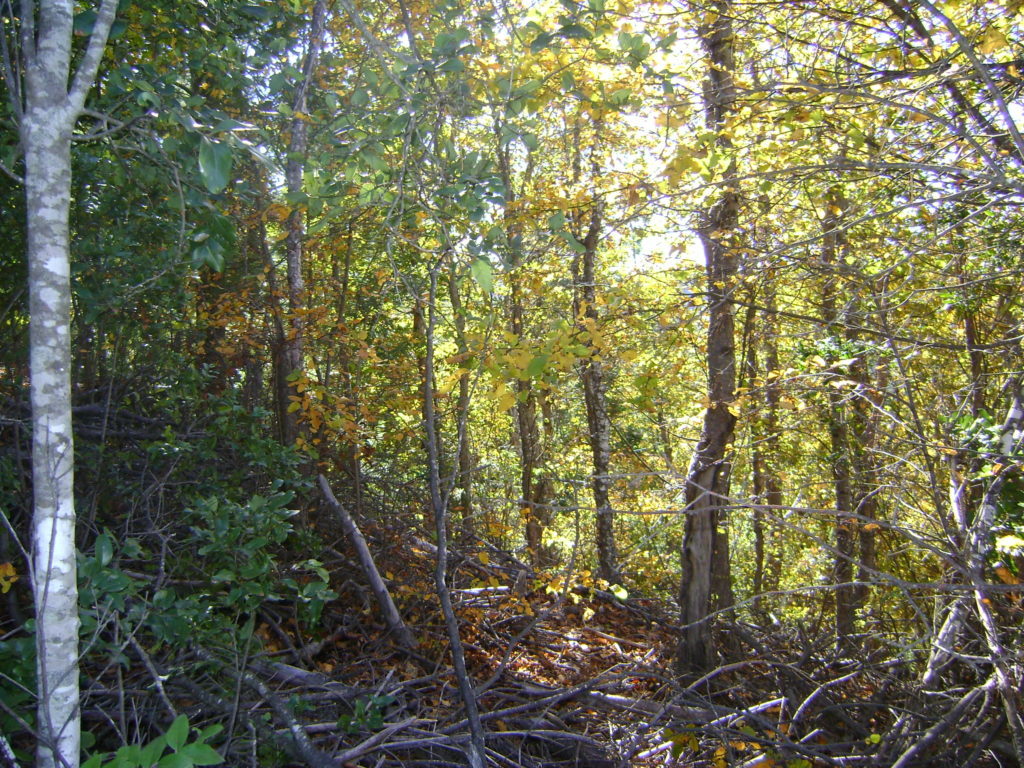
Student Bárbara González García became a Forest Engineer after developing her thesis entitled "Evaluation of the variation in regeneration and understory in forests with different levels of degradation in the commune of Empedrado, Maule Region." The research, which documents the ecological effects of species replacement and landscape alterations, was supervised by academic Dr. Álvaro Promis Baeza and reviewed by a committee made up of Horacio Bown, Federico Luebert, and Julio Torres.
The challenge of degradation in the Maule Region
The work addressed two of the most critical threats to the biodiversity of the Maulino forest: the intensification of forest fires and the subsequent expansion of exotic species. The central objective of the study was to evaluate how these different levels of alteration directly influence the capacity for natural regeneration and the composition of vascular flora present in the understory.
To carry out the diagnosis, the methodological research analyzed three contrasting ecosystems in the area. The first site corresponded to a Native Forest located in Los Ruiles National Reserve; the second was a Mixed Forest characterized by Pinus radiata regeneration under a native canopy at the El Boldo estate; and the third consisted of a highly degraded stand (Monte Bravo Alto de Pino), originating after the "Las Máquinas" megafire of 2017. In each area, information was collected through forest inventory plots, gathering physicochemical soil samples and quantifying plant presence.

Biotic homogenization and loss of resilience
González's findings showed profound significant differences depending on the level of intervention in the forests. The Native Forest ecosystem demonstrated greater structural complexity and presented better-quality soils, being less acidic and with higher content of organic matter and potassium. In addition, this sector was the only one capable of sustaining the natural regeneration of Nothofagus alessandrii (ruil), an endemic species classified as Endangered.
In contrast, the altered ecosystems showed clear signs of biological deterioration. The Mixed Forest, although it maintained a high species richness in its understory, recorded the poorest native tree regeneration of the entire measurement. For its part, the degraded stand exhibited evident biotic homogenization, marked by a high dominance of exotic pine and a drastic decrease in native flora.
The new engineer concludes in her research that habitat degradation structurally conditions the future of the Maulino forest, diverting its natural succession trajectory toward a low-resilience ecosystem dominated by invasive plants. Given this critical scenario, the study emphasizes that it is imperative to move toward active restoration models that include adaptive management, soil recovery, and strict control of exotic species to safeguard the region's biological heritage.





Comments (0)
No comments yet. Be the first to comment!
Leave a comment