

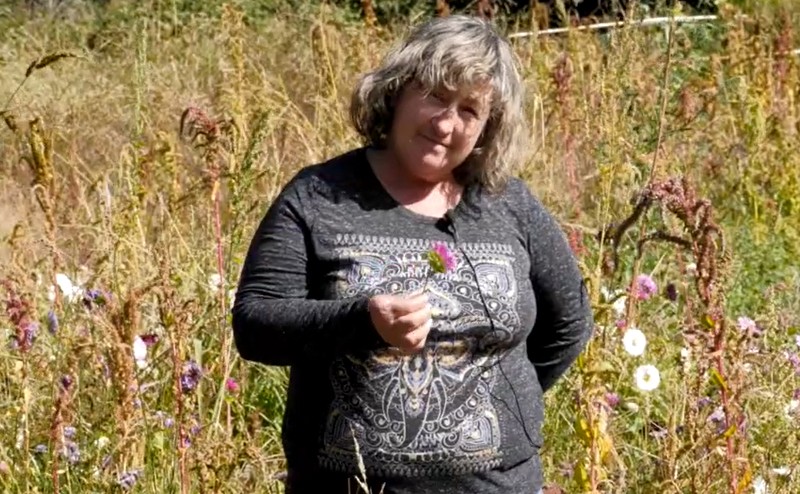
At the heart of the forest territory, there are stories that often go unnoticed, but which represent the true spirit of the rural world. They are tales of effort, perseverance, and a deep connection with nature. One of them is that of Nancy Cabezas, a farmer who has transformed daily work on the land into a life project that benefits her family, her community, and those who value fresh food produced with dedication.
From early morning, each day begins among vegetable gardens and crops. Tomatoes, lettuces, spring onions, and a wide variety of vegetables grow thanks to the constant care Nancy gives to the land. Behind each harvest are hours of work, knowledge passed down through generations, and an ongoing commitment to the quality of the products that reach her customers' tables.
Her work shows that family farming remains a fundamental pillar for the development of rural territories. Beyond producing food, it also keeps peasant traditions alive, strengthens local economies, and contributes to responsible production based on respect for natural cycles.
Over the years, Nancy has built a solid relationship of trust with those who buy her products. The freshness of the vegetables, the care put into each crop, and the dedication with which she carries out her work have made many customers return time and again, recognizing the value of consuming food produced directly by peasant hands.
Her story also reflects the close relationship between agriculture and the forest. Living in a forest environment means coexisting daily with a landscape that provides multiple benefits, from soil protection to water and biodiversity conservation. For families like Nancy's, the forest is part of their everyday surroundings and represents a space where it is possible to produce, live, and develop in harmony with nature.
Acoforag highlights that stories like this help us understand that the forestry sector is made up of people and families who find opportunities in the territory to grow, work, and plan their future. The forest not only shelters flora and fauna; it is also home to thousands of inhabitants who carry out agricultural activities, undertake ventures, and generate local development.
Nancy Cabezas precisely represents that link between food production and care for the environment. Her example shows that rural development is built day by day, with effort, perseverance, and respect for the land—values that strengthen communities and keep the traditions of the Chilean countryside alive.
Making these experiences visible also means recognizing the contribution of those who work quietly to supply fresh food to their communities and preserve a way of life deeply connected to nature. They are stories that inspire and remind us that the future of the rural world depends, to a large extent, on people committed to producing responsibly and sustainably.
Through initiatives like this, Acoforag seeks to highlight those who make the forest and the countryside a space for work, life, and development, emphasizing the contribution of women like Nancy Cabezas, whose daily effort shows that cultivating the land is also sowing a future for new generations.





Comments (0)
No comments yet. Be the first to comment!
Leave a comment