

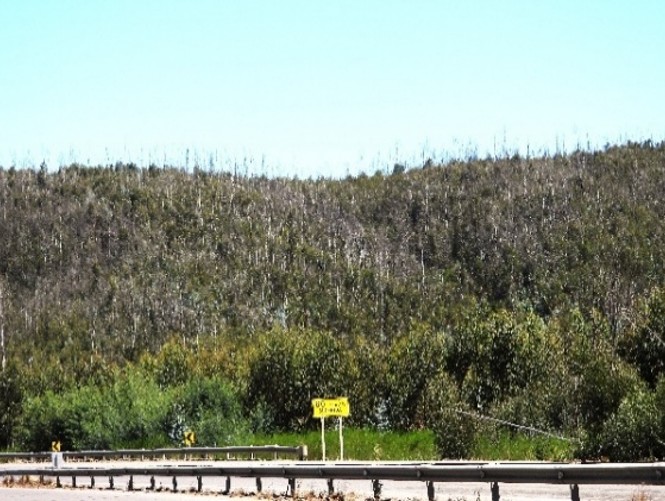
The abandonment of forest lands after fires is becoming a key factor in the spread and severity of wildfires affecting rural areas and the urban-rural interface in Chile. This was warned by Dr. Eduardo Peña F., a forest engineer and academic at the Faculty of Forest Sciences of the University of Concepción, who stated that economic losses and the high risk of new fires are discouraging small and medium-sized landowners from continuing with forestry activity.
"Frequent fires in areas with forest-suitable soils, where it is not possible to develop other types of crops, are leading many landowners to not continue in forestry production due to the high risk of burning again and not recovering their investment," the specialist explained.
According to him, when a forest plantation burns before the age of ten, the economic loss is total. The cost of planting, management, and administration alone exceeds one million pesos per hectare. If the landowner decides to reforest, they must make a similar new investment and wait between 15 and 25 years to obtain income, which can mean a property remains without production for 30 to 35 years.
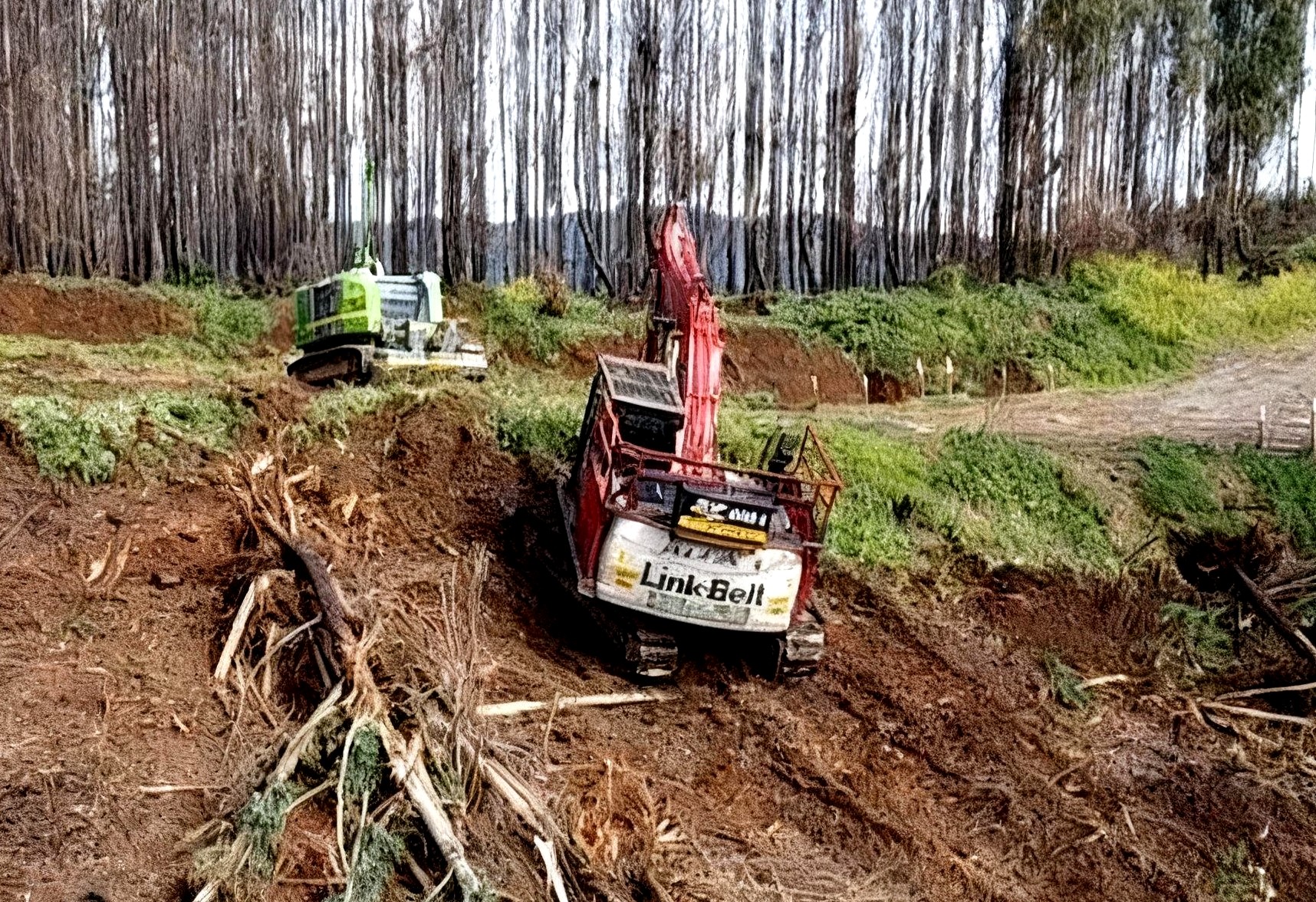
The academic pointed out that this situation is causing the abandonment of numerous forest lands, which subsequently turn into shrublands composed of introduced species, eucalyptus regrowth, and natural pine regeneration. This vegetation largely corresponds to fine fuel that, within seven to ten years, accumulates enough load to sustain fast-spreading and difficult-to-control fires.
As an example, Peña mentioned the Trinitarias fire, recorded in 2026 between Penco and Lirquén, whose spread speed was estimated to be ten times higher than usual.
Land planning and fuel management
The researcher stated that recent experiences from fires in Valparaíso (2024), Penco-Lirquén (2026), and in countries like Spain and France this year highlight the need to rethink vegetation planning around populated centers.
"We must ensure that fire cannot reach homes via the surface. Traditional firebreaks must be maintained, but in higher-risk areas, they need to be complemented with additional strips where pruning and removal of vegetative fuel are carried out," he argued.
Dr. Peña explained that in sectors with dense vegetation or homes located on hilltops, it is recommended to add approximately 70 additional meters of fuel management. This reduces the possibility of crown fires and the generation of embers capable of reaching urban areas.
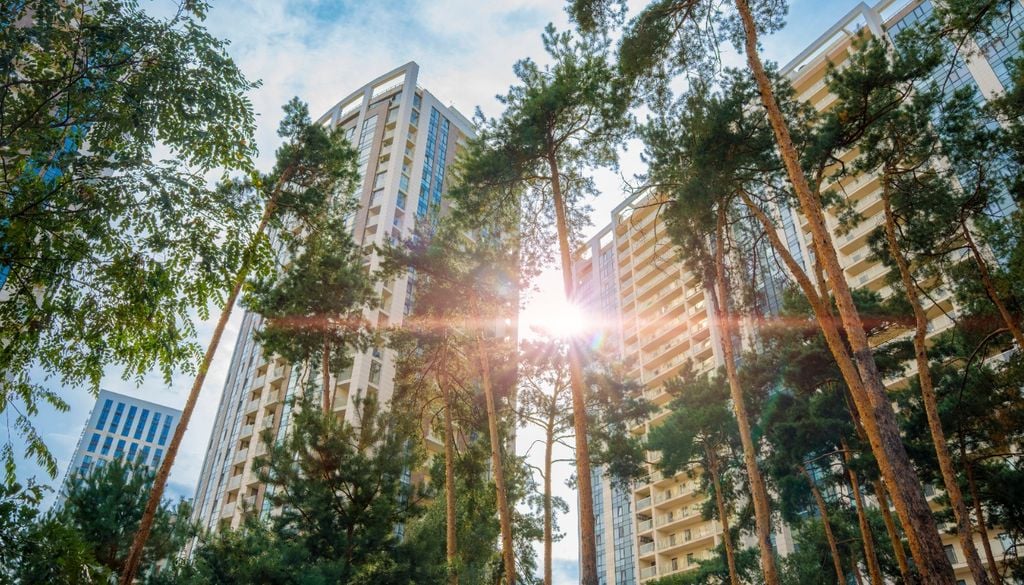
Likewise, he emphasized that homes located in the urban-rural interface must be kept free of fine dead fuel, such as dry grass, leaf litter, moss, and lichens accumulated in yards, roofs, and gutters.
"Embers can travel up to two kilometers driven by the wind, so proper preparation of homes is essential to reduce the risk of urban fires," he indicated.
The specialist recalled that the locality of Punta de Parra, in the commune of Penco, was severely affected during the 2026 fires due, among other factors, to the absence of firebreaks on its southern side and the presence of combustible material in numerous homes.
The challenge of urban isolation
The academic argued that Chile must move decisively toward fuel management around populated centers, reducing, eliminating, or modifying vegetation that poses the greatest risk of fire spread.
Furthermore, he warned that planting native species in peri-urban areas does not, by itself, constitute a definitive solution.
"There is a perception that a native forest does not burn, but if it receives no management, it can accumulate fuel over time. Even some native species have higher combustion rates than pine and eucalyptus, such as naranjillo and peumo," he explained.
As a reference, he recalled that the fire in Cochrane in 2019, which affected native forest, remained active for three months, while the fires recorded in Los Alerces National Park in Argentina during 2026 lasted for about two months and could only be extinguished thanks to rainfall.
A shared responsibility
Finally, Dr. Eduardo Peña warned that one of the main challenges in prevention corresponds to the preparation of firebreaks by small and medium-sized forest landowners, who often lack sufficient resources to implement them.
"This becomes a true Achilles' heel through which fire can enter urban centers," he noted.
Currently, public agencies, forestry companies, and the Community Prevention Network collaborate in building and maintaining thousands of meters of firebreaks in various localities across the country. However, the academic stated that fire prevention must be addressed comprehensively, also incorporating urban planning through streets, parks, and open spaces that act as barriers against fire.
"The problem of rural fires and the urban-rural interface is extremely complex and has a high probability of turning into a catastrophe. Therefore, we must understand that it is a shared responsibility. Only then will fire prevention and control be truly effective," he concluded.
I can also adapt it to a more journalistic format, with a lead and subtitles, if it will be published in a digital medium.



Comments (0)
No comments yet. Be the first to comment!
Leave a comment