

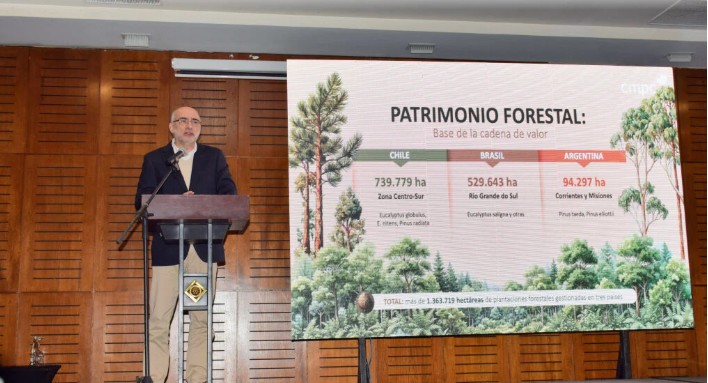
Innovation, employment, human capital development, and coordination between the public and private sectors marked the debate on the future of the forestry industry in the province of Biobío.
The discussion took place this Wednesday at the Biobío 2050 Meetings Cycle: Forestry Innovation for development, job creation, and sustainability, a gathering aimed at addressing the sector's contribution to regional development and its challenges for the coming decades, with special emphasis on the Biobío 2050 strategy.
From Empresas CMPC, the Corporate Affairs Manager for Forests, Francisco Reveco Reyes, stated that the province and particularly the commune of Los Ángeles hold significant relevance for forestry activity, even though part of that contribution is not always visible to the public.
Reveco noted that, despite the complex scenario the activity currently faces globally, there is an opportunity associated with developing new uses for forest fiber, especially as an alternative to hydrocarbon-derived materials.
"Forest fiber is called to be and will achieve being" a substitute for hydrocarbons, he stated.
In that context, he highlighted the need to connect the industry with universities and training centers to advance research, innovation, and the creation of new job opportunities.
As he explained, links are being developed with higher education institutions such as the University of Concepción and Duoc UC, with the aim of opening opportunities for young people and strengthening the capacities needed for an industry seeking to add greater value to its products.
Biobío and the opportunity of the bioeconomy
A similar view was put forward by Alejandro Casagrande Ulloa, president of Corma Biobío Ñuble, who focused on the technological transformation the forestry sector is undergoing and the opportunities associated with the so-called bioeconomy.
The industry leader highlighted that products such as wood and pulp incorporate research, knowledge, and innovation, and argued that the challenge lies in moving towards new solutions related to bioproducts, bioenergy, and biomaterials.
"Wood and pulp are products that incorporate a lot of innovation, a lot of knowledge, a lot of research."
Casagrande noted that Biobío brings together relevant conditions to take on that challenge, including universities, companies, workers, institutions, and logistical capabilities.
According to his approach, one of the main challenges is transferring those capabilities to small and medium-sized enterprises so they can move towards higher-value products and processes. "The great challenge is that we must take the world of small and medium-sized enterprises to a higher level of high value and also world-class," he indicated.
Along those lines, he highlighted the importance of production linkages and alliances between larger companies and local suppliers.
He also brought another factor considered strategic to the table: the development of human capital.
The challenge, he affirmed, is not only about incorporating machinery or developing new processes, but also about having workers and professionals prepared for the needs the region will face in the coming years.
Public-private collaboration
Along the same lines, Carolina Vivallo, provincial officer of Desarrolla Biobío, highlighted the role of public-private coordination as a key tool to drive the province's development and create an ecosystem that connects the different actors in the territory.
In that framework, she highlighted the work being developed under the Biobío 2050 strategy, where the forestry sector has significant participation through industry associations, cooperatives, and industry representatives.
As she explained, the initiative seeks to establish pillars, roles, and leaderships that allow the forestry sector to be strategically projected from the province of Biobío and strengthen its contribution to regional development.
"Today we are working on how, through the forestry sector, we can have a vision towards a Biobío 2050, defining pillars, roles, leaders, and a tremendous strategic outlook regarding the forestry sector from the province of Biobío."
Municipalities call for strengthening dialogue with communities
From the municipal sphere, the mayor of Quilaco, Pablo Urrutia, highlighted the importance of creating spaces for conversation between forestry companies, municipalities, the Regional Government, and communities.
In his view, municipalities play a coordinating role in situations that directly impact residents, such as the condition of roads used by forestry transport and the economic consequences derived from changes in the sector's employment levels.
Urrutia recounted that in Quilaco, collaboration initiatives have been developed to improve rural roads and stated that this type of coordination allows communities to better understand how productive activity works.
"The mayor is the bridge between the State and the neighbor, between the neighbor and the private company," he stated, addressing the role local governments play in these processes.
The municipal leader also expressed concern about the reduction of jobs linked to forestry activity, a situation that, as he explained, ends up generating new pressures on municipalities.
Afforestation and fire prevention
For his part, the mayor of Los Ángeles, José Pérez Arriagada, addressed the need to strengthen afforestation and support small farmers who have lost forested areas due to fires.
The municipal leader recalled afforestation policies promoted decades ago and raised the possibility of developing support mechanisms specifically aimed at small landowners.
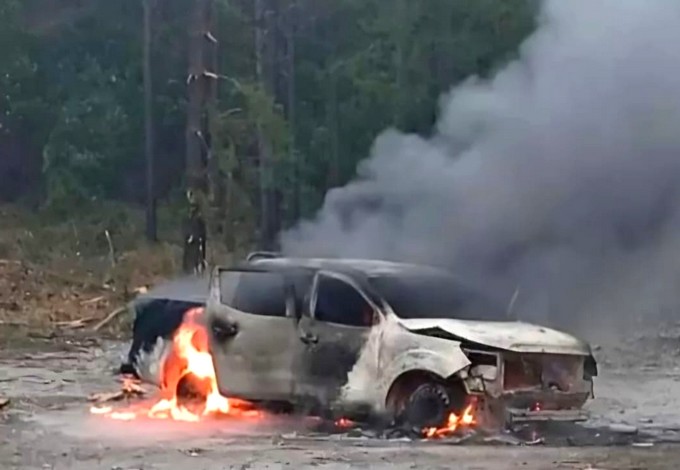
In parallel, he stated that protecting forestry activity requires strengthening fire prevention and combat capabilities, considering the temperature and wind conditions recorded during the summer season.
"I believe that first of all we must take care of the forestry sector, which generates a lot of work, generates a lot of foreign currency for the State, and avoid these intentional burns that have occurred in recent years."
For Pérez Arriagada, the discussion on the sector's future must also consider the recovery of land with forestry potential and job creation, differentiating these spaces from those intended for agricultural production.
"We have to prepare for the near future, for the summer, together with the companies to avoid this tremendous damage caused to the forestry sector."
The day left on the table a challenge that transcends the production of wood and pulp: how to transform Biobío's installed capacities into a platform for innovation, employment, and development with territorial impact.
Source:La Tribuna



Comments (0)
No comments yet. Be the first to comment!
Leave a comment