

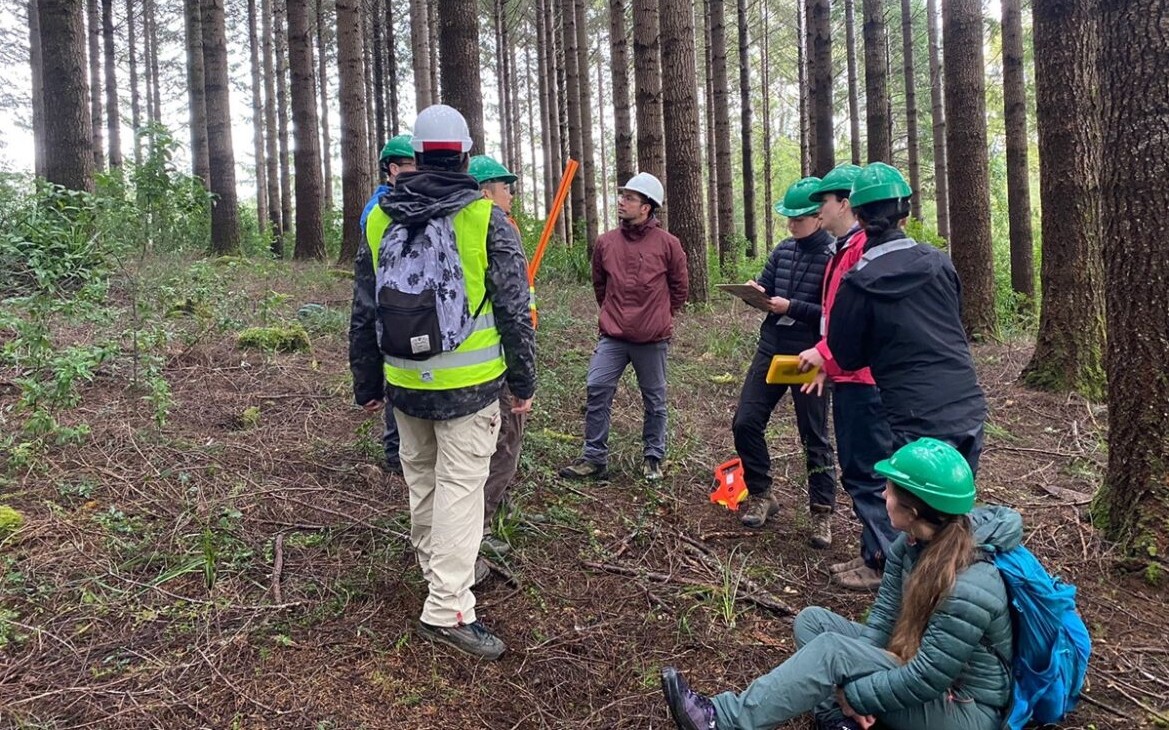
A fundamental role in the development of the course "The Role of Natural and Planted Forests in the Global Bioeconomy" at the University of British Columbia, Canada, was played by the Faculty of Forest Sciences and Natural Resources at UACh, by supporting the transfer of knowledge in the field on forest genetics, plantations, and native forest.
This is an alliance that has been maintained for several years and has been strengthened by the existence of a cooperation agreement between both universities.
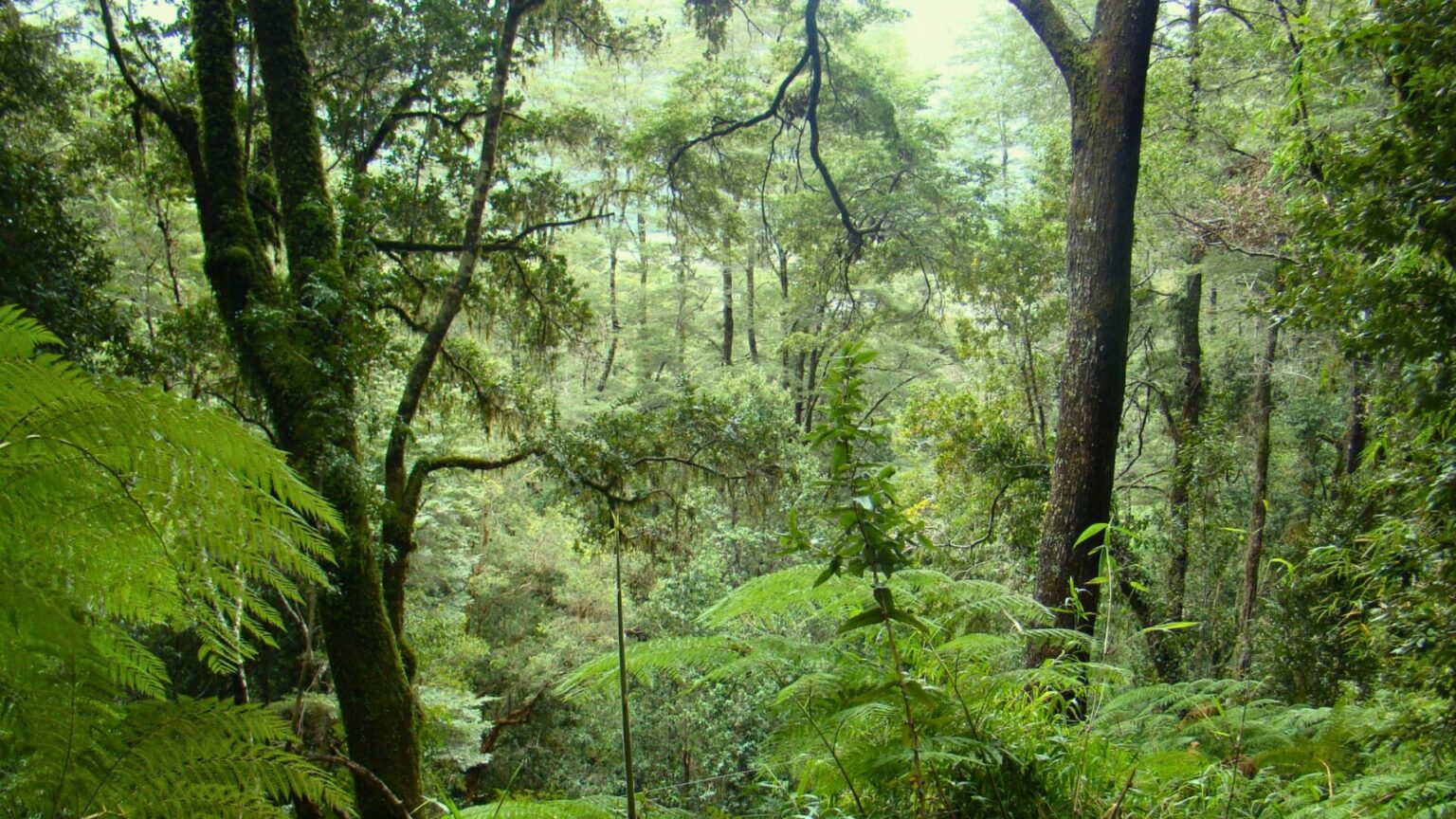
"The course is based in southern Chile because the region is an ideal laboratory to learn about, in a relatively small area, the diverse components of the forestry sector. We visited nurseries, plantations, native forest, forestry companies, Mapuche communities, sawmills of various sizes, research laboratories, universities, and national parks," explained Dr. Andrés Varhola, Course Professor at the University of British Columbia and UACh Alumni.
The professor added that the students who enroll in the course "have a fascination with learning more about the global forestry sector and are attracted by the spectacular landscapes of southern Chile and the opportunity to visit the places described."
The field trip, sponsored by UACh, included the Los Pinos and Las Palmas properties, where the students evaluated the growth of Oregon pine and characterized the soil, an activity led by the academic from the Institute of Forests and Society, Dr. Óscar Thiers.
On the other hand, in the area of forest genetics, they learned about the open pollination trial of Pinus radiata, through a talk by Dr. Fernando Droppelmann, a UACh researcher, and learned about the commercial development of oak-raulí hybrids at the Genetic Development and Propagation Center for Native Species.
"The teaching-learning activity we offered to the University of British Columbia students was to visit a very old progeny trial established on one of UACh's farms in 1976 by Professor Roberto Delmastro, and they were able to observe the behavior of the different families under local conditions. This collaboration is very important to us as it constitutes an opportunity for rapprochement both for this course and for other activities that could be developed in the future," expressed Dr. Fernando Droppelmann, one of the professors in charge of the course.
Finally, they had the opportunity to learn in depth about the Dendrology and Global Change and Forest Health laboratories, a visit that "impressed the students greatly."
For Dr. Varhola, the development of the course was very positive. "The UBC course in Chile would not be possible without the support of UACh, which provides time and resources for the noble task of educating international students on the most important forestry topics. The rating would be 10/10."



Comments (0)
No comments yet. Be the first to comment!
Leave a comment